
Comparing Seed and Plexus ProBio5? One is a science-first direct-to-consumer brand, the other is a multi-level marketing product. This Seed vs. Plexus breakdown analyzes strains, clinical evidence, pricing, and distribution model to help you choose the right probiotic for your health goals in 2026.
Key Takeaways: Seed vs. Plexus ProBio5
-
Best for Scientific Rigor: Seed DS-01 Daily Synbiotic offers 24 clinically-studied probiotic strains with 53.6 billion AFU, backed by multiple published randomized controlled trials on the actual finished product.Get Best Deal on Seed
-
Best for Budget-Conscious Shoppers: Plexus ProBio5 is priced lower at approximately $35/month and includes digestive enzymes — but lacks the clinical trial data and strain transparency of Seed.
-
Distribution Matters: Seed is sold direct-to-consumer with clear pricing. Plexus uses a multi-level marketing model, meaning products are sold through independent consultants rather than traditional retail channels.
- Transparency Difference: Seed publishes strain-specific clinical research and potency verification. Plexus provides less publicly available clinical documentation on their specific formula.
Quick Verdict
If you're looking for a probiotic with published clinical trials on the exact formula, strain-level transparency, and a delivery system designed for survivability, Seed DS-01 wins decisively. It's the more expensive option, but you're paying for verifiable science.
Plexus ProBio5 appeals to those prioritizing budget and the convenience of purchasing through a consultant, with the added benefit of digestive enzymes in the formula. However, the lack of public clinical trials on the specific ProBio5 formula and the multi-level marketing distribution model give me pause from a transparency standpoint.
Seed DS-01 vs. Plexus ProBio5: Head-to-Head
| Feature | Seed DS-01 Daily Synbiotic | Plexus ProBio5 |
|---|---|---|
| Probiotic Strains | 24 diverse, clinically-studied strains | 5 probiotic strains + 4 digestive enzymes |
| Potency | 53.6 Billion AFU | Not publicly disclosed in same format |
| Prebiotic | Pomegranate punicalagins + pine bark polyphenols (non-fermenting) | Not specified |
| Delivery System | ViaCap® capsule-in-capsule (shelf-stable) | Standard capsule (refrigeration recommended) |
| Clinical Evidence | Multiple published RCTs on DS-01 formula | Limited public clinical data on specific formula |
| Price (Monthly) | ~$49.99 | ~$35 |
| Distribution Model | Direct-to-consumer (subscription) | Multi-level marketing (MLM) |
| Allergens | Free from major allergens, vegan | Check label for specifics |
Deep Dive: Seed DS-01 Daily Synbiotic
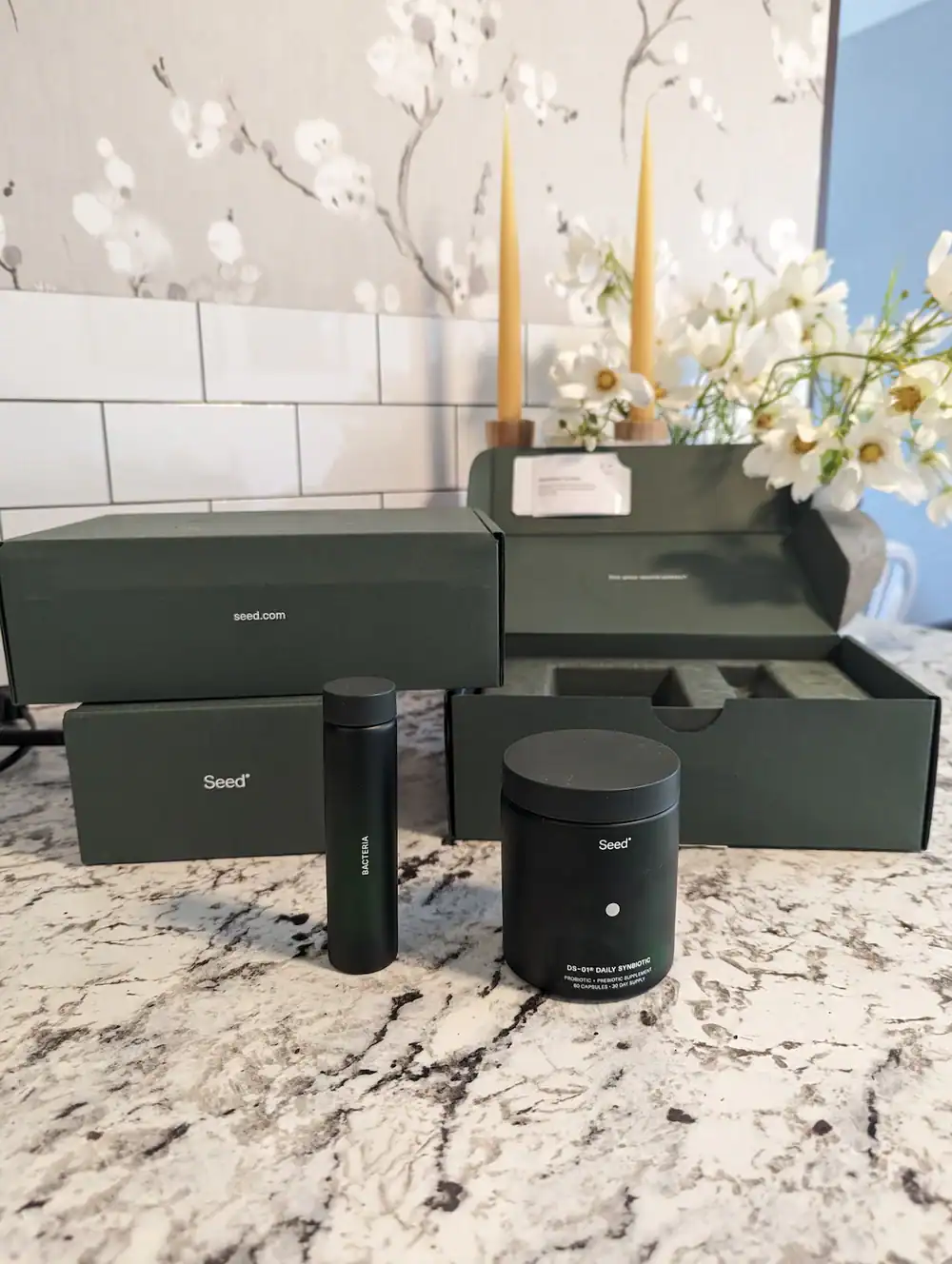
The Science-First Approach
The Gold Standard for Probiotic Transparency
Seed DS-01 represents what I consider the gold standard in probiotic supplementation. It delivers 24 clinically-studied probiotic strains at 53.6 billion AFU (Active Fermentation Units), organized into four targeted blends: digestive health, skin health, heart health, and micronutrient synthesis.
What sets Seed apart is their commitment to clinical research on the actual finished product — not just individual strains. Their published trials include a 350-person study on bloating and digestive comfort (Allegretti et al., Nutrients, 2026), and a 91-day trial demonstrating increased Urolithin A and butyrate production (Napier et al., Nutrients, 2025; PMID: 40944126).
The ViaCap® delivery technology is a capsule-within-a-capsule system that protects probiotics from stomach acid, ensuring they reach the intestines alive. Combined with their non-fermenting prebiotic (pomegranate punicalagins and pine bark polyphenols), this formula is designed for both potency and gentleness.
"Seed DS-01 is the only probiotic I recommend to patients who want verifiable clinical results. The fact that they've published RCTs on their exact formula — not just the individual strains — is what separates them from most of the market."
— Daryl Stubbs, RMT, CAT(C), Holistic Nutritionist
Deep Dive: Plexus ProBio5
The MLM Option
Probiotic + Enzyme Combination
Plexus ProBio5 is a multi-level marketing product that combines five probiotic strains with four digestive enzymes (protease, amylase, lipase, and lactase). The addition of enzymes is a legitimate differentiator — they may help break down proteins, carbohydrates, fats, and dairy for some users with digestive enzyme deficiencies.
Plexus sells through independent consultants, which means you won't find their products in retail stores. The pricing is attractive at approximately $35/month, making it more accessible than Seed's $49.99/month price point.
However, from a transparency perspective, there are concerns. Unlike Seed, Plexus does not publish the same level of strain-specific clinical research on their ProBio5 formula. The strain count (5) is considerably lower than Seed's 24 strains, and the potency is not disclosed in the same AFU format that allows for independent verification.

About the MLM Model
Plexus uses multi-level marketing distribution, meaning products are sold through a network of independent consultants who earn commissions on sales. This is a legitimate business model, but it does mean that product pricing often includes margins that support the compensation structure. From a consumer standpoint, the lack of retail availability can make price comparisons with equivalent products difficult.
Key Differences That Matter
1. Clinical Evidence & Transparency
Seed has invested heavily in publishing clinical trials on their exact DS-01 formula. These are real, peer-reviewed studies on the finished product — not just research on individual strains used in the formula. Plexus ProBio5 does not have the same level of publicly available clinical documentation. For me as a practitioner, this matters significantly when making recommendations.
2. Strain Diversity & Potency
Seed's 24 strains at 53.6 billion AFU represents high diversity and high potency. Plexus ProBio5 contains 5 strains — fewer than Seed, though it compensates with added digestive enzymes. The key question is whether fewer strains with enzymes provides better outcomes than more strains with superior delivery technology.
3. Delivery Technology
Seed's ViaCap® system is genuinely innovative — it's a capsule-within-a-capsule designed to survive stomach acid and deliver organisms to the intestines. Plexus uses a standard capsule format, which the company recommends be refrigerated. This is a meaningful difference in product engineering.
4. Prebiotic Formulation
Seed uses pomegranate punicalagins and pine bark polyphenols as prebiotics — these are non-fermenting, meaning they're less likely to cause bloating compared to traditional FOS or inulin. Plexus does not specify a prebiotic component in ProBio5.
5. Distribution & Pricing
Seed is sold direct-to-consumer with transparent pricing. Plexus uses MLM distribution, which adds consultant margins to the pricing structure. Seed is more expensive ($49.99/mo vs ~$35/mo), but you're paying for clinical verification and superior delivery technology.
"In my practice, I've had patients try both. Those who switched from Plexus to Seed often report better tolerance and more noticeable digestive changes — but cost is real. For patients on a tight budget, ProBio5 is a reasonable option, just don't expect the same level of clinical validation."
— Daryl Stubbs, RMT, CAT(C), Holistic Nutritionist
My Recommendation
For most patients seeking a daily probiotic to support overall gut health, I recommend Seed DS-01. The combination of 24 strains, 53.6 billion AFU, ViaCap® delivery technology, published clinical trials, and non-fermenting prebiotics makes it the more evidence-based choice.
Choose Plexus ProBio5 if budget is your primary concern and you're already connected with a Plexus consultant. The digestive enzymes are a nice addition, but the lack of published clinical data on the formula and the MLM distribution model are factors to consider.
If you do go with Seed, I recommend committing to at least 3 months — that's the timeline used in their clinical trials. Use code syntherapy at checkout for up to 25% off.
Frequently Asked Questions
Does Plexus ProBio5 require refrigeration?
Plexus recommends refrigerating ProBio5 to maintain potency. Seed DS-01 is shelf-stable and does not require refrigeration, thanks to its ViaCap® delivery technology that protects the organisms from heat and moisture.
Can I switch from Plexus to Seed?
Absolutely. There's no contraindication to switching probiotic brands. In fact, some patients find they tolerate Seed better due to the non-fermenting prebiotic blend. I'd suggest a brief transition period where you complete your current Plexus supply before starting Seed.
Why is Seed more expensive than Plexus?
Seed's higher price reflects several factors: more strains (24 vs 5), higher potency (53.6 billion AFU), proprietary delivery technology (ViaCap®), published clinical trials on the actual product, and direct-to-consumer pricing without MLM margins. You're paying for verifiable science and product engineering.
Does Plexus ProBio5 have clinical trials?
I couldn't find published randomized controlled trials on the specific Plexus ProBio5 formula in the same way Seed has published trials on DS-01. Plexus may conduct internal research, but it's not published or publicly available to the same degree. This is a key transparency difference between the two brands.
Which is better for bloating?
Based on the available evidence, Seed DS-01 has a published 350-person clinical trial specifically measuring bloating reduction (Allegretti et al., 2026). Seed's non-fermenting prebiotic (pomegranate punicalagins) is also less likely to cause bloating compared to fermentable prebiotics. Plexus ProBio5 does not have comparable published data on bloating outcomes.
Ready to Choose?
For evidence-based probiotic support, Seed DS-01 is my top recommendation.
Get Seed DS-01 with Code syntherapy