
Two premium probiotic brands, two very different approaches. Seed delivers 24 clinically-studied strains with transparent labeling and third-party validation, while Cymbiotika markets luxury positioning with liposomal delivery. This Seed vs Cymbiotika comparison cuts through the branding to reveal which product actually delivers results.
Key Takeaways: Seed vs. Cymbiotika
- Best for Scientific Transparency: Seed DS-01 discloses all 24 specific strains with alphanumeric codes, allowing verification against clinical research. Cymbiotika provides limited strain transparency.
- Best Potency & Delivery: Seed delivers 53.6 billion AFU with ViaCap® capsule-in-capsule technology. Cymbiotika uses liposomal delivery but does not disclose comparable potency metrics.
- Best Value: Seed at $49.99/month undercuts Cymbiotika's ~$60/month price point while offering substantially more clinical evidence.
- Clinical Validation: Seed has completed multiple DBRCTs on its final DS-01 formula. Cymbiotika relies on borrowed strain-level research without product-specific trials.
Our Top Recommendations
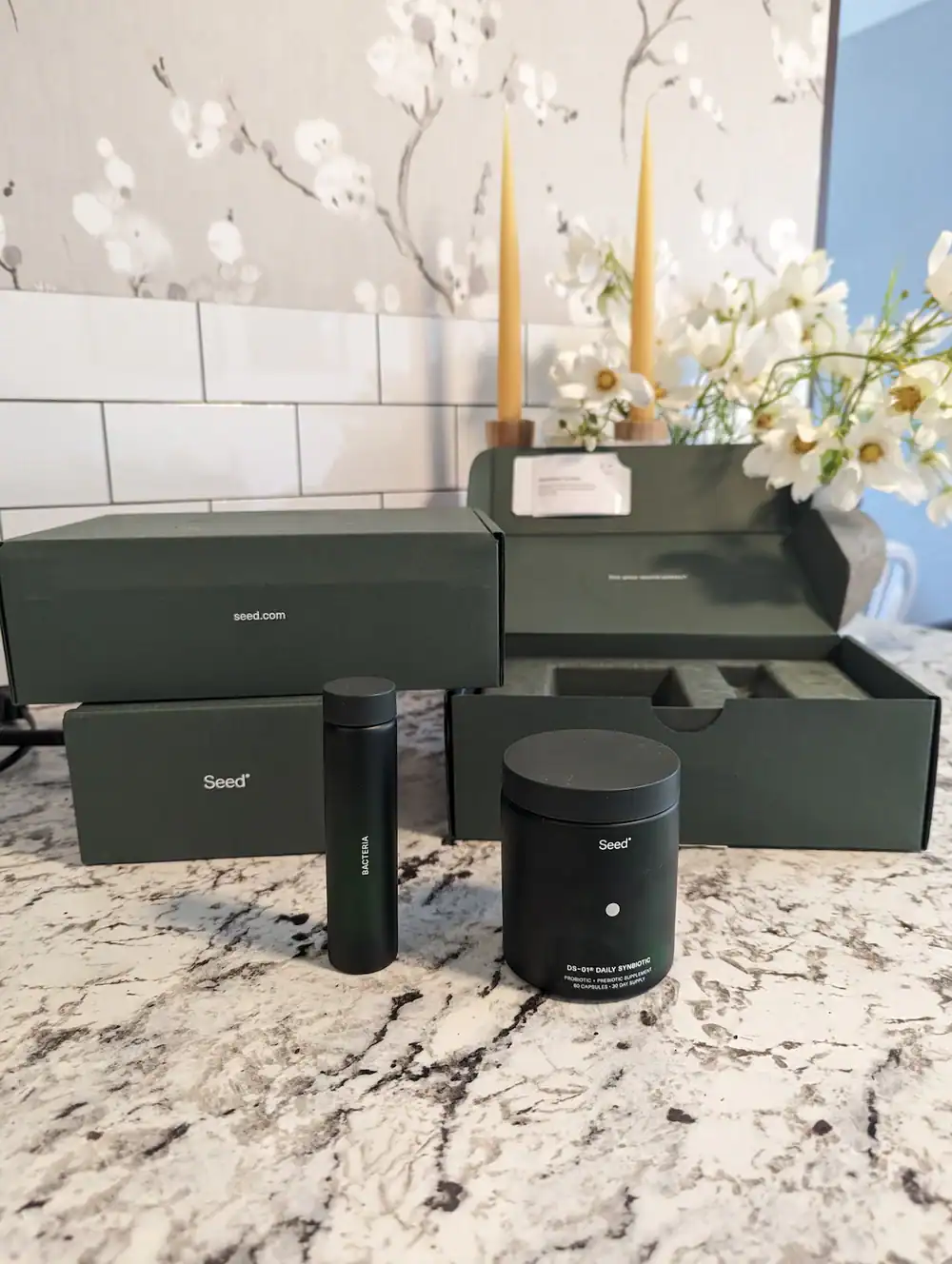
Seed DS-01 Synbiotic
Best for Clinical Evidence
24 strains, 53.6B AFU, ViaCap delivery. The most clinically-validated synbiotic on the market.

Cymbiotika Probiotic
Luxury Market Positioning
Liposomal delivery technology with premium branding. Limited strain transparency.

Quick Verdict
Seed DS-01 is the clear winner for anyone serious about probiotic efficacy. With 24 clinically-validated strains, 53.6 billion AFU potency, ViaCap® delivery technology, and multiple completed randomized controlled trials on the final product, Seed offers transparent, evidence-based gut support. Cymbiotika's luxury positioning and liposomal delivery are appealing, but the lack of strain transparency, undisclosed potency, and absence of product-specific clinical trials make it impossible to verify its marketing claims.
At $49.99/month versus Cymbiotika's ~$60/month, Seed also delivers better value with substantially more science behind it.
Seed vs. Cymbiotika: Side-by-Side Comparison
| Feature | Seed DS-01 Daily Synbiotic | Cymbiotika Probiotic |
|---|---|---|
| Strain Count | 24 specific, named strains | Not fully disclosed |
| Potency | 53.6 Billion AFU | Not disclosed |
| Delivery Technology | ViaCap® capsule-in-capsule | Liposomal |
| Prebiotic | Pomegranate punicalagins + pine bark polyphenols | Not disclosed |
| Product-Specific Clinical Trials | Yes (DBRCTs completed) | No |
| Third-Party Testing | Yes (Eurofins) | Claimed, not verified |
| Monthly Price | $49.99/mo | ~$60/mo |
| Transparency | Full strain disclosure | Limited |
| Get Seed DS-01 | Research Only |
Deep Dive: Seed DS-01 Daily Synbiotic
The Science-Backed Standard
Seed DS-01 represents the gold standard in probiotic transparency and clinical validation. This synbiotic combines 24 specific probiotic strains—each identified by alphanumeric designation codes like SD-BB536-JP and SD-LPLDL-6™—with a prebiotic blend of pomegranate punicalagins and pine bark polyphenols.
The key differentiator is Seed's commitment to product-specific clinical trials. Unlike competitors who rely on borrowed research from individual strains, Seed has completed multiple double-blind, randomized, placebo-controlled trials (DBRCTs) on the exact DS-01 formula. The 2026 bloating trial (n=350) showed significant reductions in bloating and gas, while the 91-day metabolite trial demonstrated increased Urolithin A production by approximately 100-fold and elevated butyrate levels.
- 24 specific strains with full transparency and traceability
- 53.6 billion AFU potency measured via Active Fluorescent Units
- ViaCap® delivery — capsule-in-capsule technology protects organisms through stomach acid
- Non-fermenting prebiotic — pomegranate punicalagins + pine bark polyphenols won't cause bloating
- Multiple DBRCTs completed on the final product
Expert Insight
"Seed is one of the few probiotic companies investing in clinical trials on their actual finished product. The 2026 350-person bloating trial and the 91-day metabolite study represent the level of evidence I'd want to see before recommending any supplement to my patients."
— Daryl Stubbs, RMT, CAT(C), Holistic Nutritionist
Deep Dive: Cymbiotika Probiotic
Luxury Branding Without the Science
Cymbiotika positions itself as a premium, luxury wellness brand with sophisticated packaging and liposomal delivery technology. The brand emphasizes high-end aesthetics and positioning in the premium supplement market.
However, upon closer examination, several red flags emerge. Cymbiotika does not fully disclose its strain count or specific strains used. The potency is not clearly stated on the label or website, making it impossible to compare CFU or AFU counts with competitors. While liposomal delivery is an interesting technology for nutrient absorption, without knowing the underlying potency or strain quality, the delivery mechanism alone cannot justify the premium price.
Most critically, Cymbiotika has not conducted product-specific clinical trials on its finished formula. The marketing relies on borrowed science about individual strains rather than evidence that the final product delivers benefits.
Concerns
- No disclosed strain count or specific strains
- Potency not clearly stated
- No product-specific clinical trials
- Premium pricing without proportional evidence
Key Differences That Matter
1. Strain Transparency
Seed provides full disclosure of all 24 strains with alphanumeric codes allowing verification against clinical research. Cymbiotika does not disclose strain specifics, making it impossible to verify whether their product contains evidence-backed strains. In probiotic science, strain specificity matters—benefits are tied to specific strains, not just species.
2. Potency Disclosure
Seed clearly states 53.6 billion AFU (Active Fluorescent Units), measured through a validated method that accounts for live, viable, and metabolically active organisms. Cymbiotika does not disclose comparable potency metrics. Without this information, consumers cannot assess whether they're getting a clinically-relevant dose.
3. Clinical Validation
Seed has completed multiple DBRCTs on DS-01, including a 350-person bloating trial and 91-day metabolite study. Cymbiotika has not conducted product-specific clinical trials. This is a fundamental difference—Seed proves their product works, while Cymbiotika relies on marketing.
4. Prebiotic Formulation
Seed uses pomegranate punicalagins and pine bark polyphenols—a non-fermenting polyphenolic prebiotic that won't cause bloating or gas. This is a deliberate design choice for sensitive individuals. Cymbiotika does not disclose their prebiotic ingredients, leaving another gap in informed consumer decision-making.
5. Price vs. Value
Seed costs $49.99/month with substantially more clinical evidence, transparency, and third-party testing. Cymbiotika's ~$60/month price point lacks comparable justification. The value proposition heavily favors Seed.
Expert Perspective
"I've recommended Seed DS-01 to dozens of patients dealing with bloating, IBS symptoms, and general gut health issues. The clinical evidence gives me confidence the product delivers what's promised. I cannot say the same for brands that hide their strain information behind luxury packaging."
— Daryl Stubbs, RMT, CAT(C), Holistic Nutritionist
My Recommendation
For 2026, Seed DS-01 is the clear winner in this comparison. The combination of 24 specific strains, 53.6 billion AFU potency, ViaCap delivery technology, completed clinical trials, and full transparency justifies its $49.99/month price. Cymbiotika's luxury branding and liposomal delivery are not enough to overcome the lack of transparency and absence of product-specific clinical evidence.
Choose Seed if you want a probiotic where you can verify every strain, every potency claim, and every benefit against published research. The clinical trials provide assurance that the product delivers measurable outcomes.
Skip Cymbiotika unless the brand provides full transparency—which they have not to date. Premium packaging does not equal premium science.
Use code syntherapy at checkout for up to 25% off your order.
Frequently Asked Questions
Is Seed better than Cymbiotika?
Yes. Seed offers full strain transparency, disclosed potency (53.6 billion AFU), ViaCap delivery technology, and multiple completed clinical trials on the final product. Cymbiotika lacks transparency on strains, potency, and has no product-specific trials. For the evidence-based consumer, Seed is the clear choice.
What makes Seed's delivery system unique?
Seed uses ViaCap® technology—a capsule-in-capsule system designed to protect probiotic organisms from stomach acid and ensure targeted release in the colon. This is a significant advantage over standard delayed-release capsules used by most competitors, including Cymbiotika's liposomal approach.
Does Cymbiotika have clinical trials?
No. Cymbiotika has not conducted product-specific clinical trials on their finished probiotic formula. They rely on borrowed research about individual strains rather than evidence that their specific combination delivers benefits.
What is Seed's prebiotic?
Seed uses pomegranate punicalagins and pine bark polyphenols—a non-fermenting polyphenolic prebiotic blend. Unlike common fiber prebiotics (inulin, FOS), this formulation is designed not to cause bloating or gas, making it suitable for individuals with sensitive digestive systems.
How long should I take Seed before evaluating results?
I recommend giving any probiotic at least 90 days before evaluating results. Seed's clinical trials evaluated participants over 12-week (84-day) periods, aligning with the typical timeline for microbiome remodeling. Most patients report noticeable improvements in digestive comfort, bloating, and energy by weeks 6-8, with more systemic benefits emerging around the 3-month mark.
Ready to Choose Evidence Over Marketing?
Skip the luxury branding. Choose a probiotic with transparent labeling, disclosed potency, and clinical trials to back up its claims.
Use code syntherapy at checkout