
Choosing between Seed and Bioma? You're not alone. Both are highly visible supplements promising better gut health, but they operate on fundamentally different principles. This expert review of Seed vs. Bioma cuts through the marketing hype to analyze the science, quality, and real-world risks, helping you decide which is the right choice for your health in 2026.
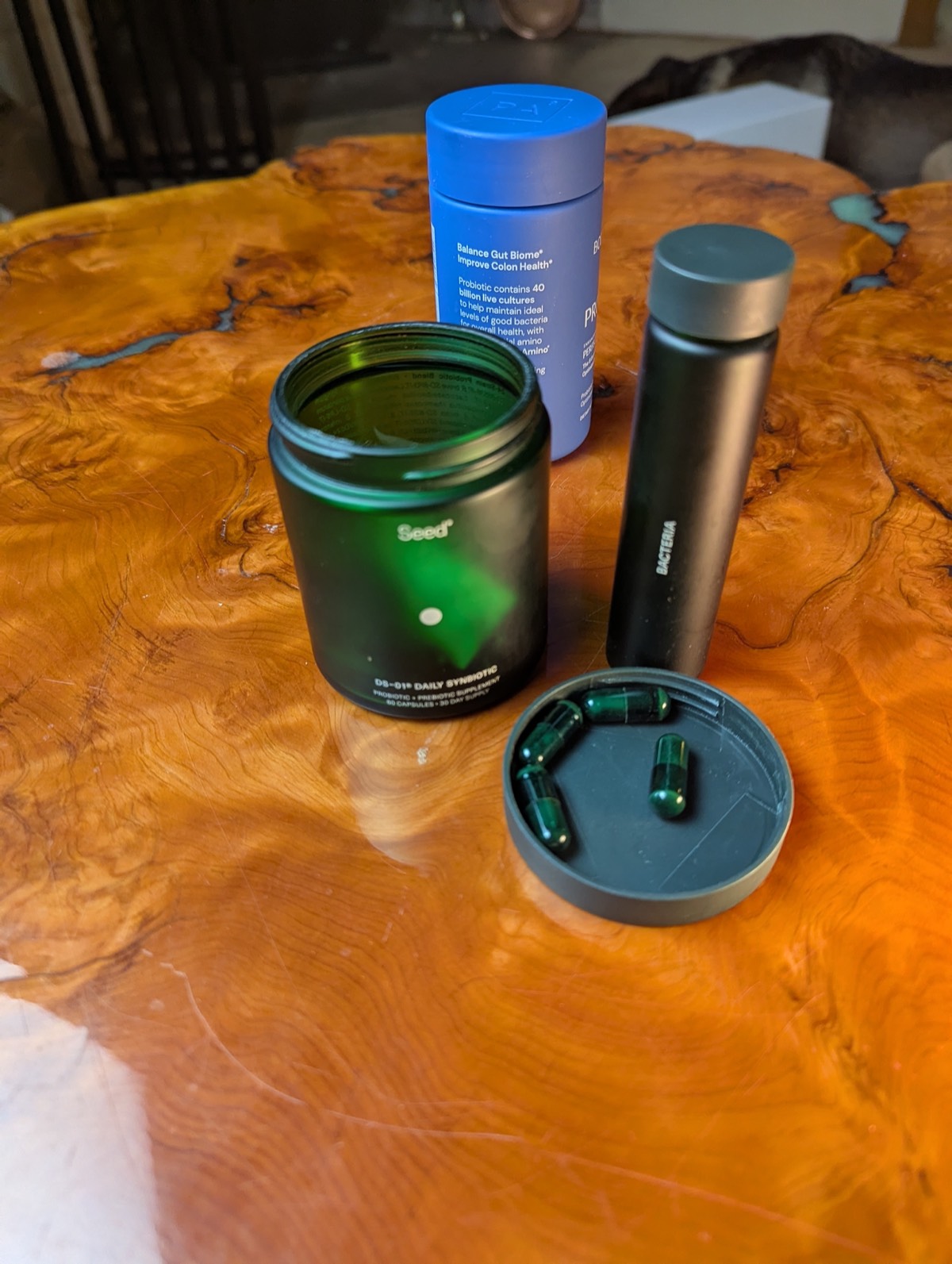
Key Takeaways: Seed vs. Bioma
- Best for Scientific Validity & Gut Health: Seed's DS-01 Daily Synbiotic is a scientifically-formulated product with 24 specific, clinically-researched strains, making it the superior choice for those targeting digestive wellness with proven ingredients.
- Popular for Weight Management (with major caveats): Bioma is heavily marketed for weight loss, but its claims are unsubstantiated by clinical trials on its final product. Its formulation lacks transparency and poses significant consumer risks.
- Transparency is Key: Seed provides full transparency on its 24 strains and uses a precise potency measurement (AFU). Bioma conceals its strain details and provides no verifiable potency count, a major red flag.
- Counterfeit Risk: Seed's controlled distribution prevents fakes. Bioma's presence on open marketplaces like eBay and Walmart has led to widespread consumer complaints of receiving counterfeit products.
Our Top Recommendations
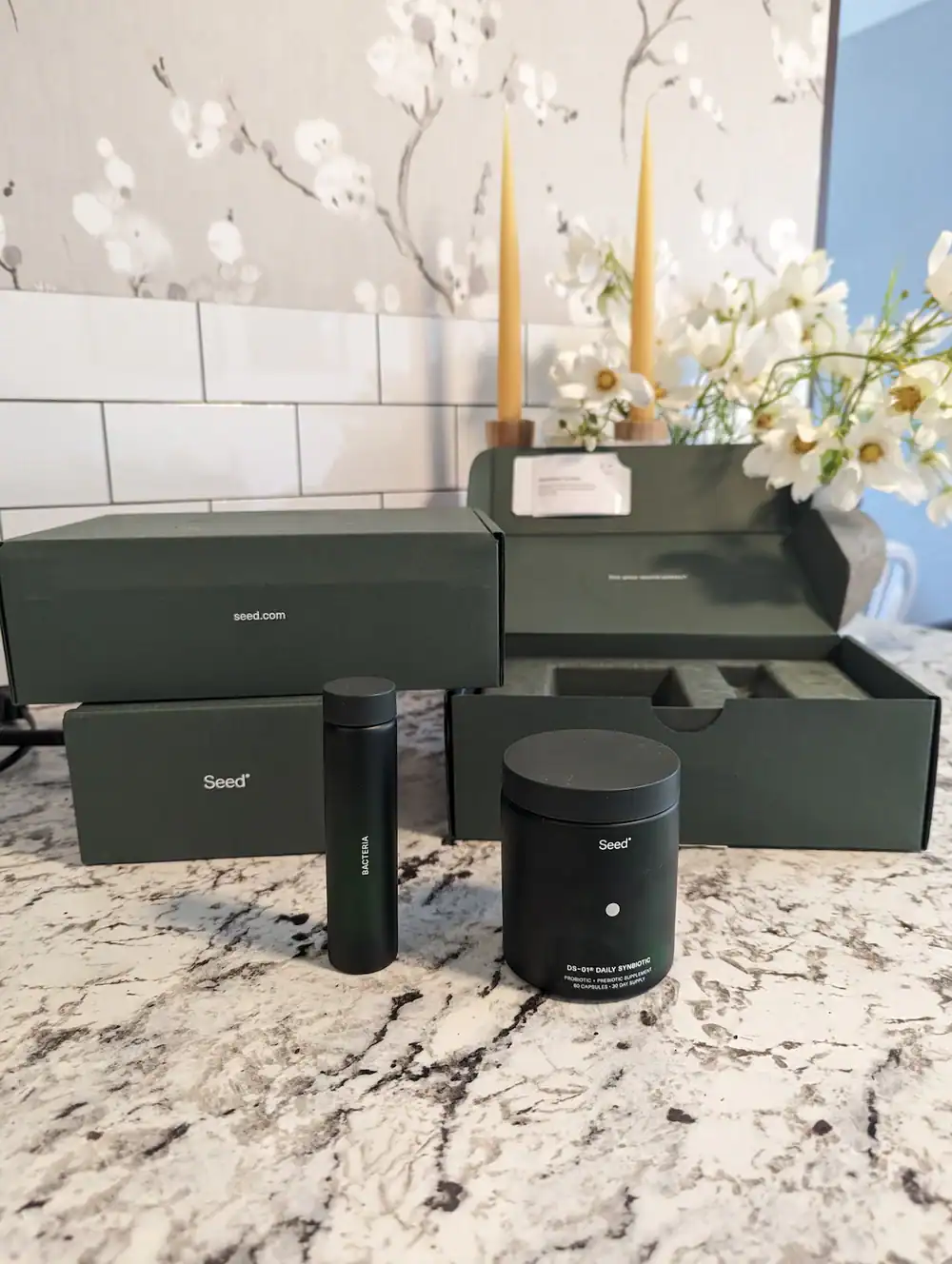
Seed DS-01 Synbiotic
Best for Gut Health & Scientific Trust
The top choice for targeting bloating and digestive issues with a powerful, transparent, and science-backed formula.
Bioma Probiotic
Popular for Weight Management Claims
A heavily marketed supplement claiming to support digestion and weight loss, but lacks scientific proof and transparency.

What Problems Do Seed and Bioma Claim to Solve?
Consumers turn to these supplements with specific health goals in mind. Here’s how each product positions itself:
Digestive Discomfort (Bloating, Irregularity)
Seed excels here with its clinically-studied 24-strain formula and advanced delivery system designed for maximum gut impact. Bioma claims to help, but its vague formula and lack of evidence make this unreliable. Find out if probiotics help with bloating.
Weight Management
Bioma heavily focuses its marketing on weight loss, a claim that is not supported by clinical trials on their product. Seed focuses on systemic health, and while a healthy gut can influence metabolic health, it does not make direct weight loss claims.
Overall Health & Immunity
Seed supports immunity and whole-body health through scientifically validated mechanisms like gut barrier integrity and micronutrient synthesis. Bioma's impact on general health is speculative due to its unproven formulation.
Seed vs. Bioma: A Side-by-Side Comparison
| Feature | Seed DS-01 Daily Synbiotic | Bioma Probiotic |
|---|---|---|
| Primary Goal | Targeted gut & systemic health | Weight management & general digestion |
| Probiotics | 24 specific, named strains | 3 generic, unnamed species |
| Potency | 53.6 Billion AFU (Active Fluorescent Units) | Not listed on official site; inconsistent claims elsewhere (e.g., 9 Billion CFU) |
| Delivery System | ViaCap® 2-in-1 capsule for targeted release | Standard delayed-release capsule |
| Product-Specific Clinical Trials | Yes (Completed & Ongoing) | No |
| Third-Party Testing | Yes (Extensive, transparent) | Claimed, but unverified |
| Corporate Transparency | Excellent (Clear US company) | Very Poor (Obscured, complex structure) |
| Counterfeit Risk | None (Controlled supply chain) | Extremely High (on marketplaces) |
| Get Best Deal on Seed | Visit Bioma Website |
Ingredient Deep Dive: A Scientific Breakdown
The true value of a probiotic lies in its formulation. A detailed look at the ingredients reveals why Seed's approach is rooted in verifiable science, while Bioma's remains speculative. The most critical principle in probiotic science is strain specificity—benefits are tied to specific strains (like *L. rhamnosus GG*), not just the species (like *L. rhamnosus*).
| Component | Seed DS-01 Daily Synbiotic | Bioma Probiotic |
|---|---|---|
| Probiotic Strains |
24 specific, alphanumeric-designated strains. Examples: Bifidobacterium longum SD-BB536-JP, Lactiplantibacillus plantarum SD-LP1-IT, Lacticaseibacillus rhamnosus SD-GG-BE. Allows direct traceability to clinical trials. |
3 generic species. Listed as: Bifidobacterium lactis, Bifidobacterium longum, Bifidobacterium breve. No strain designation, making it impossible to verify claims against specific research. |
| Key Strain Evidence |
|
Relies on "borrowed science." While the *species* have known benefits, the efficacy of the specific, unnamed strains used in Bioma is unproven. |
| Prebiotic |
Indian Pomegranate [MAPP] A novel, non-fermenting polyphenolic prebiotic. Designed to fuel the probiotic strains without causing gas or bloating, making it suitable for low-FODMAP diets. |
Xylooligosaccharides (XOS) A known prebiotic fiber. Can be effective, but the efficacy of the specific dose within this formula is untested. |
| Delivery System |
ViaCap® 2-in-1 Capsule Proprietary capsule-in-capsule system designed to protect live probiotics from stomach acid and ensure targeted release in the colon. |
Delayed-Release Capsule A standard technology used to help capsules bypass stomach acid. Less advanced than Seed's system. |
Deep Dive: Seed DS-01 Daily Synbiotic
A Formula Built on Science
The Gold Standard for Scientific Trust
Seed DS-01 is a synbiotic engineered with scientific precision. It combines 24 clinically-validated probiotic strains—each identified by a specific code for traceability—with a novel, non-fermenting prebiotic derived from Indian pomegranate.
Its key innovation is the ViaCap® Delivery Technology, a capsule-within-a-capsule that shields the live probiotics from stomach acid, ensuring they arrive alive in the colon. This commitment to viability and evidence is why it's our top choice. For more detail, see our full Seed Probiotics review.
- Clinically-Validated Formula: 24 specific strains (53.6 Billion AFU) to support digestion, immunity, and even skin health.
- Advanced Prebiotic: Fuels the probiotics without causing the bloating associated with common fibers.
- Proven Efficacy: Clinical trials on the final DS-01 product show it increases beneficial compounds like Butyrate and Urolithin A.
- Rigorous Quality Control: Extensive third-party testing for purity, potency, and contaminants.
User Experience & Company Ethos
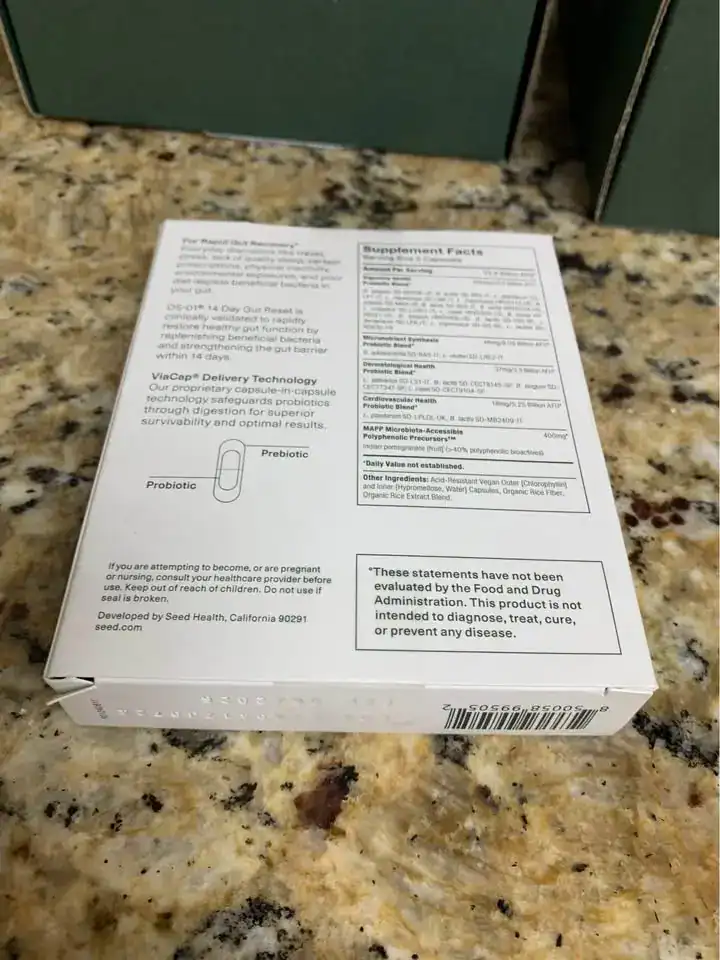
Seed's commitment to science extends to its user experience and company values. The product arrives in a thoughtful welcome kit that includes a refillable glass jar and a smaller glass travel vial, designed to protect the capsules from light and moisture.
Subsequent months arrive in a minimalist, compostable pouch, reflecting a strong commitment to sustainability. This refill system drastically reduces plastic waste compared to the standard monthly plastic bottles used by most competitors, including Bioma.
This ethos is part of a larger mission. Seed operates SeedLabs, an ecological research division, to develop novel applications for bacteria to solve environmental problems. This positions them not just as a supplement seller, but as a biosciences company invested in planetary health.
Expert Insight
"Seed operates like a bioscience company, not a marketing company. Their investment in clinical trials on the final DS-01 formula, transparent strain disclosure, and advanced AFU potency testing sets a benchmark for the entire industry. This is what 'science-backed' should actually mean."
Deep Dive: Investigating the Bioma Formula
A Marketing-Driven "3-in-1" Formula
Bioma is marketed as a "3-in-1" synbiotic containing probiotics, prebiotics, and postbiotics. However, its formulation raises numerous red flags. It lists only three generic species of bacteria (e.g., "Bifidobacterium breve") without the specific strain codes necessary to verify their benefits.
Most concerning is the complete lack of a stated potency (CFU or AFU) on its official website. This, combined with an untraceable corporate structure and a high risk of counterfeit products on marketplaces, makes Bioma a high-risk choice for consumers.
User Experience & Corporate Obscurity
The user experience with Bioma is inconsistent and fraught with risk. The product is sold in a standard plastic bottle. The primary issue is the chaotic and uncontrolled supply chain. Because it's widely available on third-party marketplaces, consumers face a high risk of receiving counterfeit products, as documented in numerous customer reviews.
This risk is compounded by a near-total lack of corporate transparency. The "Bioma" brand is linked to a confusing web of companies in the UK, Lithuania, and the US, making it nearly impossible for a consumer to identify who is actually responsible for the product's quality and safety. This obscurity shields the operators from accountability.
Expert Warning
"The lack of strain specificity and a verifiable potency count are critical failures for a probiotic. Without this information, all efficacy claims are purely speculative. The rampant counterfeit issue further elevates the risk, as a consumer has no guarantee they are receiving a safe, or even real, product. This is a classic example of marketing over substance."
Cost vs. Value: A Deeper Analysis
Looking beyond the daily price tag reveals a stark difference in what you're actually paying for.
The Value of Seed: Paying for Certainty
Seed's premium price (approx. $1.91/day with code) is not arbitrary. It reflects a significant investment in scientific integrity. This cost covers:
- Ongoing clinical research on the final DS-01 formula.
- Extensive third-party testing for purity, potency, and 500+ contaminants.
- The proprietary ViaCap® delivery technology.
- A controlled, counterfeit-proof supply chain.
- Sustainable, plastic-reducing packaging.
You are paying for a product with verifiable ingredients and proven mechanisms.
The Risk-Adjusted Cost of Bioma
Bioma's variable and often lower price is a direct reflection of its business model. The apparent "value" is severely diminished by:
- Zero investment in clinical trials for its formula.
- Unverified claims of third-party testing.
- A high risk of paying for an ineffective or counterfeit product.
- No guarantee of ingredient identity or potency.
The true cost is a gamble—you might be paying for a product that offers no benefit at all.
Timeline for Benefits: Managing Expectations
Understanding how long it takes to feel a difference is key to a successful probiotic experience. The effects are not always immediate, as your microbiome needs time to adapt.
Seed: A Phased Approach
Seed is transparent about the user journey. Some individuals may experience a brief adjustment period (mild gas or bloating) in the first few days.
-
Weeks 1-2: Early benefits like improved regularity and easier bowel movements are often reported.
-
Weeks 3-4: Reduction in bloating and continued digestive improvements.
-
Month 2+: Systemic benefits, such as improved skin health and metabolic function, may become more apparent as the gut-skin and gut-metabolism axes are influenced.
Bioma: An Unpredictable Outcome
Because Bioma has no clinical trials on its final formula, there is no scientific basis for a timeline of benefits. Any reported effects are based on anecdotal user testimonials, which are unreliable due to the placebo effect and the high prevalence of counterfeit products.
Without verifiable ingredients or potency, any timeline is purely speculative.
Who It's Best For: Our Final Verdict
The choice between Seed and Bioma is a choice between scientific certainty and a marketing gamble.
Choose Seed if...
You are a discerning consumer who values transparency, scientific evidence, and quality assurance. If your goal is to genuinely improve your digestive and systemic health with a product that is proven to work and is safe, Seed is the unequivocal choice. With numerous studies backing its efficacy and safety, this product stands out in an ever-crowded market. As you explore options, be sure to look up the seed probiotics review 2026 to see firsthand accounts of real users who have experienced remarkable benefits. Making an informed choice has never been more critical for your health.
Avoid Bioma if...
You want a product with proven ingredients, verifiable potency, and a guarantee of authenticity. The significant risks associated with its lack of transparency and uncontrolled supply chain make it a choice we cannot recommend.
Seed for Scientific Trust
Bioma for Marketing Hype
Your Probiotic Checklist: An Empowering Buyer's Guide
Use this article as a tool. When evaluating any probiotic supplement, ask these critical questions to protect your health and your wallet.
-
Does it list specific strains?
Look for full alphanumeric codes (e.g., Lactobacillus rhamnosus GG), not just the species name. This is non-negotiable for verifying research.
-
Is there clinical evidence on the final product?
Don't be fooled by "borrowed science." The company should have invested in research on its specific formula.
-
Is the potency clear and guaranteed?
The label should clearly state the potency (in CFU or AFU) and guarantee it through the expiration date, not just "at time of manufacture."
-
Is the company transparent?
Can you easily identify the company behind the product? Do they provide evidence of third-party testing for purity and contaminants?
Frequently Asked Questions
Is Bioma a legitimate probiotic?
While Bioma is a real product being sold, it lacks the fundamental markers of a high-quality, legitimate probiotic. Its failure to disclose specific strains and a verifiable potency, combined with its untraceable corporate structure and the high risk of counterfeits on marketplaces, makes it a highly questionable and risky choice for consumers.
For bloating, is Seed or Bioma better?
Seed is definitively better for bloating. Its formula contains 24 specific strains clinically studied for digestive health benefits, delivered via a capsule designed to survive stomach acid. Bioma's claims to help bloating are unsubstantiated, and its vague formula cannot be trusted to deliver consistent results. Learn more about how probiotics can help with bloating.
Why is Bioma so focused on weight loss?
Weight loss is a powerful marketing tool in the supplement industry. Bioma leverages this by making strong, yet unproven, claims about its product's ability to help users lose weight. There are no clinical trials on the final Bioma formula to support these claims, which should be viewed with extreme skepticism.
What are the risks of buying Bioma from Amazon, eBay, or Walmart?
The primary risk is receiving a counterfeit product. Numerous customer complaints describe receiving bottles with the wrong capsules, incorrect seals, or different ingredients. These fakes are ineffective at best and potentially unsafe at worst. Because Bioma's distribution is not controlled, there is no way to guarantee you are buying an authentic product from these marketplaces.
Ready to Make an Informed Choice?
Invest in your health with a product built on science and transparency. Avoid the risks of unproven marketing claims.