
A professional red light therapy bed costs $30,000–$70,000. A panel setup that delivers the exact same therapeutic wavelengths? Under $2,000. So why do beds even exist—and more importantly, which one should you buy?
As a Registered Massage Therapist, Certified Athletic Therapist, and Holistic Nutritionist who uses red light therapy daily in my clinic, I've spent years evaluating both beds and panels for patient treatments and personal use. This guide cuts through the marketing hype to give you an honest, practitioner-level comparison.
The bottom line: Beds and panels use identical photobiomodulation science—same wavelengths, same cellular mechanisms, same therapeutic benefits. The difference is delivery method, convenience, and cost. By the end of this guide, you'll know exactly which option fits your situation.
Quick Answer: Red Light Therapy Bed or Panel?
Choose a Red Light Bed If:
- You're a clinic owner prioritizing client experience
- Time efficiency is critical (8-15 min full-body sessions)
- Budget isn't a constraint ($20,000+)
- You have dedicated space and 220V electrical
Choose Red Light Panels If:
- You're a home user seeking therapeutic benefits
- Budget matters ($500-$3,000 range)
- You want flexibility for targeted + full-body use
- Space is limited or you rent your home
Red Light Therapy Bed vs Panel: Head-to-Head Comparison
Before we dive deep, here's the comparison most people need:
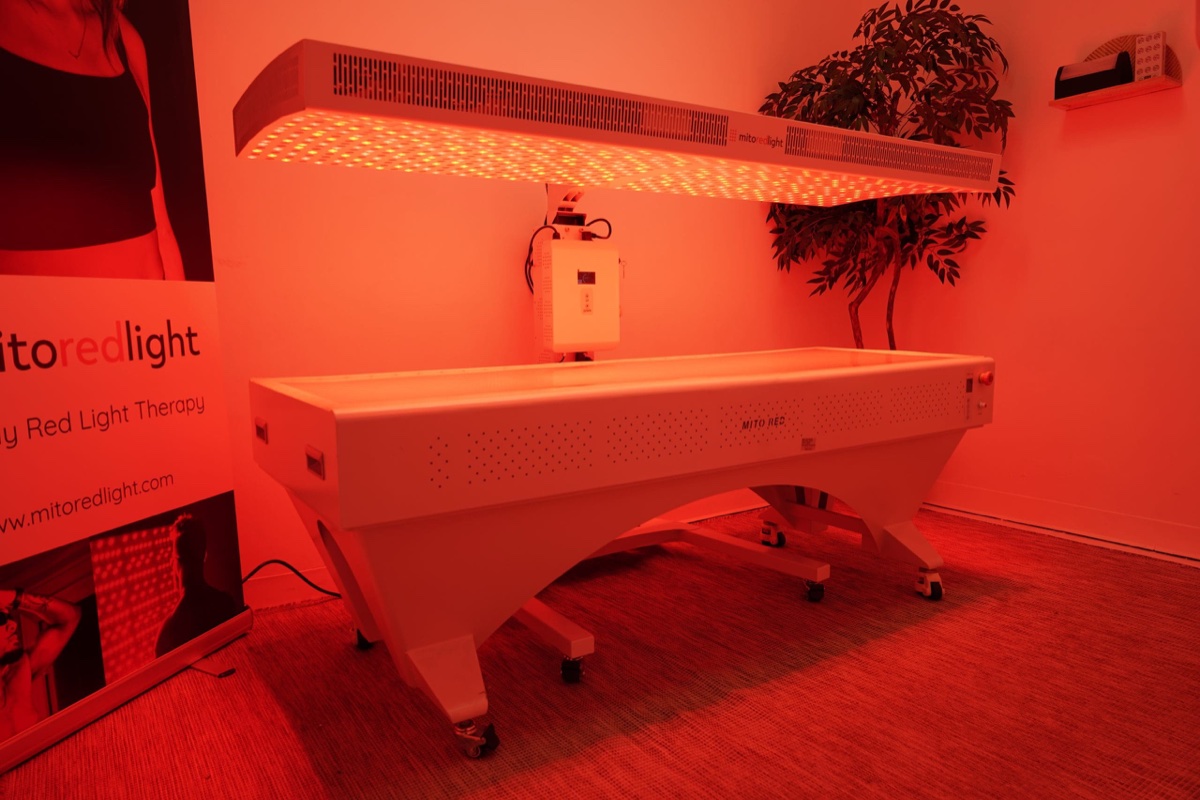
| Factor | Red Light Therapy Beds | Red Light Therapy Panels | Winner |
|---|---|---|---|
| Cost (Home Use) | $5,000–$15,000 | $500–$3,000 | Panels |
| Cost (Commercial) | $20,000–$120,000+ | $2,000–$10,000 | Panels |
| Full-Body Treatment Time | 8–15 minutes | 20–40 minutes | Beds |
| Coverage | 360° simultaneous | One side at a time | Beds |
| Therapeutic Wavelengths | 660nm / 850nm | 660nm / 850nm | Tie |
| Cellular Benefits | Mitochondrial stimulation | Mitochondrial stimulation | Tie |
| Irradiance (mW/cm²) | 50–165 mW/cm² | 70–200+ mW/cm² | Panels |
| Space Required | Dedicated room (7'×4'+) | Door/wall mount | Panels |
| Electrical | Often 220V/30A | Standard 120V | Panels |
| Comfort | Lie down, passive | Stand/reposition | Beds |
| Portability | Fixed location | Portable, travel-friendly | Panels |
| Maintenance | Clean between uses | Minimal (no skin contact) | Panels |
The Critical Insight Most Articles Miss
Notice that therapeutic wavelengths and cellular benefits are identical. This is the most important point: the science is the same. Everything else—cost, time, convenience—is about delivery method, not effectiveness.
What's In This Guide
Comparison Sections
Why You Can Trust This Red Light Therapy Comparison
Most "beds vs panels" articles are written by brands selling one or the other. This guide comes from a different perspective.
Practitioner Experience
I use red light therapy daily in my award-winning clinic, treating real patients with conditions like back pain, arthritis, and inflammation.
Triple-Certified
RMT, Certified Athletic Therapist (CAT(C)), and Holistic Nutritionist—I understand both the science and clinical application.
No Single-Product Agenda
I've used both beds and panels professionally. My goal is helping you choose right—not selling you a specific device.
Research-Backed
Recommendations based on peer-reviewed photobiomodulation research, not manufacturer marketing claims.
Red Light Therapy Bed vs Panel: What's the Difference?
Before comparing specifics, let's clarify what we're actually comparing:
What Is a Red Light Therapy Bed?
Full-body systems where you lie down inside an enclosed or open-air structure. LEDs surround your body from above and below, delivering 360-degree exposure simultaneously. Think "tanning bed, but with red/NIR light instead of UV."
- Treats front and back at once
- Passive, spa-like experience
- 8-15 minute sessions
- Large footprint, dedicated space
- $20,000-$120,000+ investment
What Is a Red Light Therapy Panel?
Wall-mounted, stand-mounted, or door-hung LED arrays. You stand or sit in front of them, treating one side at a time. Range from small targeted panels to large full-body panels. Modular designs allow combining multiple units.
- Flexible placement options
- Targeted OR full-body use
- $500-$3,000 investment
- One side at a time
- Requires repositioning
The Photobiomodulation Science Is Identical
Here's what most comparison articles won't tell you: both beds and panels use the exact same therapeutic mechanism.
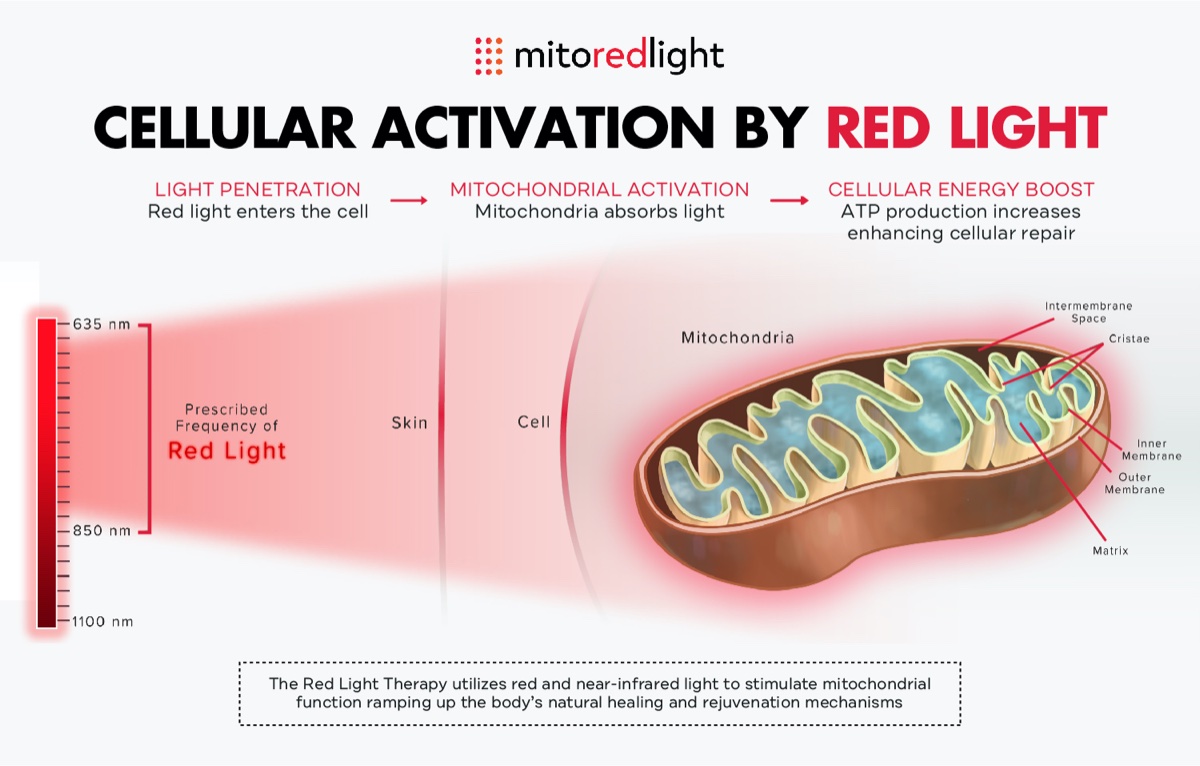
Photobiomodulation works by delivering specific wavelengths of light (primarily 660nm red and 850nm near-infrared) to your cells. This light is absorbed by chromophores in your mitochondria, stimulating ATP production and triggering a cascade of beneficial cellular responses—reduced inflammation, enhanced tissue repair, improved circulation.
Whether those photons come from a $50,000 bed or a $1,500 panel is irrelevant to your cells. They respond to wavelength and dose, not price tag.
Key Point:
The difference between beds and panels is about delivery method—not therapeutic effectiveness. Same wavelengths = same cellular benefits.
Red Light Therapy Bed Cost vs Panel Pricing: Full Breakdown
Let's break down the full cost picture—not just sticker price, but total cost of ownership. For a deeper dive, see my complete red light therapy cost guide.
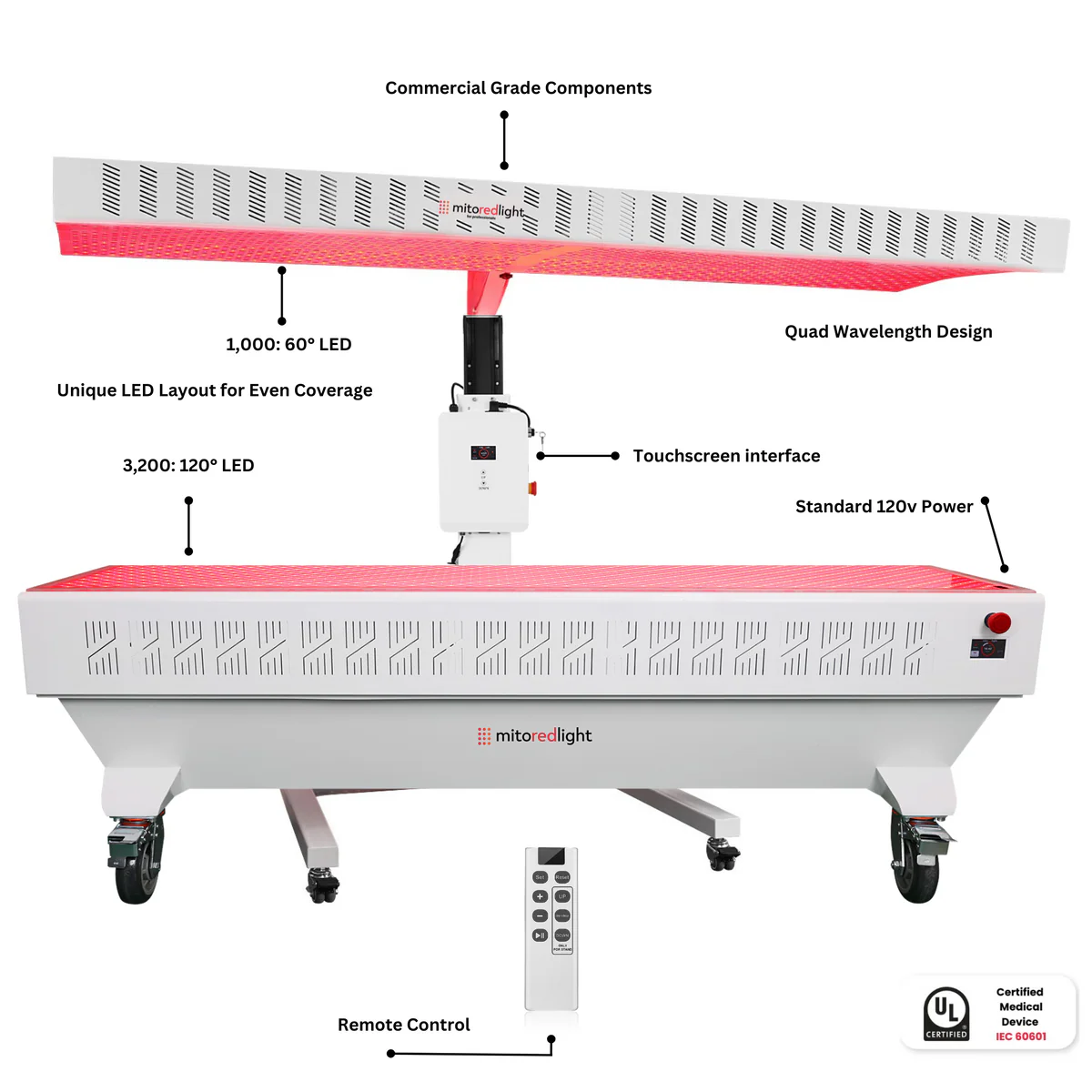
Upfront Purchase Cost: Beds vs Panels
| Category | Red Light Beds | Red Light Panels |
|---|---|---|
| Entry-Level Home | $5,000–$8,000 | $129–$500 (small) $500–$1,500 (large) |
| Mid-Range Home/Light Commercial | $15,000–$25,000 | $1,500–$3,000 (full-body setup) |
| Commercial Grade | $20,000–$70,000 | $3,000–$10,000 (multi-panel array) |
| Premium Commercial | $60,000–$120,000+ | $5,000–$15,000 (professional setup) |
Hidden Costs: What the Sticker Price Doesn't Tell You
Bed Hidden Costs
- Electrical upgrade: $500–$2,000 (220V circuit installation)
- Delivery/installation: $500–$1,500
- Dedicated room: Lost square footage value
- Cleaning supplies: Ongoing (skin contact surfaces)
- LED replacement: $1,000–$5,000 (every 5-10 years)
Panel Hidden Costs
- Electrical upgrade: $0 (standard 120V)
- Delivery: Often free or included
- Stand/mount: $100–$300 (if not included)
- Cleaning supplies: Minimal (no skin contact)
- LED replacement: Rarely needed (50,000+ hour lifespan)
Cost-Per-Treatment: Home Panel vs Clinic Sessions
Here's where panels become even more compelling for home users:
Scenario: 5 Years of Red Light Therapy (3x/week)
Clinic Sessions (Bed)
- Average cost: $50/session
- Sessions over 5 years: 780
- Total cost: $39,000
Home Panel Setup
- Panel investment: $1,500
- Electricity over 5 years: ~$150
- Total cost: ~$1,650
Home panel savings: $37,350 over 5 years
Break-Even Calculation
A $2,000 panel pays for itself in just 33-40 avoided clinic sessions. At 3 sessions/week, that's roughly 3 months. Everything after that is pure savings. Learn more in my red light therapy costs guide.
Full Body Red Light Therapy: Treatment Time Comparison
This is where beds have an undeniable advantage—if time is your primary constraint. Understanding how often to use red light therapy is just as important as session duration.
Session Duration: Beds vs Panels
Red Light Beds: 8-15 Minutes
360-degree simultaneous exposure means your entire body receives treatment at once. Lie down, relax, done.
- No repositioning required
- Consistent dosing front and back
- Ideal for busy clinic schedules
Red Light Panels: 20-40 Minutes (Full Body)
Treat front for 10-15 minutes, then back for 10-15 minutes. Or use a two-day rotation (front/back one day, legs/arms the next).
- Can multitask (read, stretch, work)
- Flexible scheduling options
- Target specific areas when needed
Does Extra Time Actually Matter for Home Users?
For most home users, the answer is no. Here's why:
- You're already home. An extra 15 minutes isn't "lost" time—many people read, meditate, or do light stretching during panel sessions.
- Consistency beats speed. A therapy you actually use 5x/week beats a "faster" option you skip because it requires traveling to a clinic. Frequency matters.
- Targeted treatments take the same time. If you're treating a specific injury or skin concern, panels and beds are equivalent.
The time advantage of beds matters most for commercial operations where client throughput directly impacts revenue.
Are Red Light Therapy Beds More Effective Than Panels?
This section addresses the most common misconception: that beds are more "effective" than panels.
Therapeutic Wavelengths: Identical for Beds and Panels
Both quality beds and panels deliver the same therapeutic wavelengths:
660nm Red Light
Penetrates 1-2mm into skin. Primary benefits for skin health and anti-aging, collagen production, wound healing, and surface-level inflammation.
850nm Near-Infrared
Penetrates 3-5cm into tissue. Primary benefits for muscle recovery, joint pain, deep tissue repair, and systemic inflammation reduction.
Your mitochondria don't know or care whether these wavelengths come from a bed or panel. The photobiomodulation mechanism is identical.
Irradiance: Panels Often Deliver More Power
Here's something manufacturers don't advertise: many panels deliver higher irradiance than beds.
Irradiance (measured in mW/cm²) indicates how much therapeutic light reaches your skin per unit area. Higher irradiance means faster dose delivery.
- Typical beds: 50-165 mW/cm² (at skin contact or typical distance)
- Quality panels: 70-200+ mW/cm² (at 6 inches)
Panels can deliver higher irradiance because they're designed for closer positioning. Beds spread light across a larger enclosed area, which can dilute intensity.
Can Panels Achieve Full-Body Red Light Therapy Coverage?
Yes, absolutely. Here's how to set up red light therapy at home:
Option 1: Sequential Positioning (Single Large Panel)
- Front treatment: 10-15 minutes
- Back treatment: 10-15 minutes
- Total: 20-30 minutes for complete coverage
- Cost: $800-$2,000
Option 2: Two-Panel Setup (Simultaneous Front/Back)
- Mount one panel in front, one behind
- Treat front and back simultaneously
- Total: 10-15 minutes for complete coverage
- Cost: $1,600-$4,000
A Kala quad-panel setup can provide bed-like coverage at a fraction of the cost.
The 95/5 Rule
Panels deliver approximately 95% of the therapeutic benefits at 5-10% of the cost of beds. The 5% you "lose" is convenience and speed—not effectiveness. See before and after results from both devices.
Red Light Bed Installation: Space & Electrical Requirements
Space Requirements: Beds vs Panels
Red Light Therapy Beds
- Footprint: 7-8 ft × 3-4 ft minimum
- Clearance: 3+ ft on all sides for access
- Total room: 10×12 ft recommended
- Weight: 300-600+ lbs (floor reinforcement may be needed)
- Ceiling height: 8+ ft (for open-air designs)
Red Light Therapy Panels
- Footprint: 2×3 ft (standing space)
- Mounting: Door, wall, or stand
- Storage: Can hang when not in use
- Weight: 15-60 lbs (no floor concerns)
- Ceiling height: Standard 8 ft is fine
Electrical Requirements for Red Light Therapy
| Requirement | Red Light Beds | Red Light Panels |
|---|---|---|
| Voltage | Often 220V/30A dedicated circuit | Standard 120V outlet |
| Electrician Required? | Usually yes ($500-$2,000) | No |
| Power Draw | 1,500-3,000+ watts | 100-500 watts per panel |
| Rental Property Friendly? | No (permanent installation) | Yes (portable) |
Maintenance & Hygiene
- Beds: Require cleaning after each use due to skin-to-surface contact. In commercial settings, this adds 5-10 minutes between clients. Acrylic surfaces need specific cleaners to avoid damage.
- Panels: Minimal cleaning since there's no skin contact. Occasional dusting of ventilation openings. No between-use sanitization needed.
When to Buy a Red Light Therapy Bed
Despite the cost premium, beds make sense in specific situations:
High-Volume Commercial Clinics
Med spas, chiropractic offices, and wellness centers treating 20+ clients/day benefit from the 8-15 minute session times. Faster throughput = more revenue per square foot.
Premium Client Experience Focus
If your brand is built on luxury experiences, the spa-like feel of lying in an enclosed bed creates a more "premium" perception than standing in front of panels.
Mobility Limitations
Users who cannot stand for extended periods benefit from lying down during treatment. Beds eliminate the need for repositioning. Especially relevant for treating conditions like fibromyalgia or chronic fatigue.
Professional Athletic Facilities
NFL, NBA, and professional sports teams use beds for rapid full-body recovery. Time efficiency matters when managing 30+ athletes.
Budget Is Not a Constraint
If you can comfortably afford $20,000+ and have dedicated space, the convenience of a bed may be worth it for personal use.
The MitoCabin represents a middle-ground option between panels and full beds.
For those in these situations, I've compiled a detailed guide to the best commercial red light therapy beds with verified specs and ROI analysis.
When to Buy Red Light Therapy Panels
Panels are the right choice for the vast majority of users:
Home Users (90%+ of Individual Buyers)
If you're buying for personal home use, panels deliver equivalent therapeutic benefits at 5-10% of the cost. The extra treatment time is negligible when you're already at home.
Budget-Conscious Buyers
$1,500 for a quality panel vs $25,000+ for a bed. Same wavelengths, same cellular benefits, dramatically different investment. Check current red light therapy costs for updated pricing.
Limited Space
Apartments, condos, or homes without dedicated wellness rooms. Panels hang on doors, mount on walls, or store in closets.
Targeted Treatment Needs
Treating specific injuries, joints, or skin areas? Panels offer flexibility beds can't match. Point the panel exactly where you need it—ideal for tendinitis, neuropathy, or scar treatment.
Clinics Starting Out or Testing Demand
Before committing $30,000+ to a bed, test market demand with a $3,000-$5,000 panel setup. Upgrade to a bed once you've proven ROI.
Biohackers Wanting Wavelength Control
Many panels offer adjustable wavelengths, pulsing modes, and intensity control. Beds are typically fixed protocols.
For panel recommendations, see my detailed guide to the best red light therapy panels with head-to-head comparisons of top brands like Rouge, Mito Red, Kala, Infraredi, Hooga, and PlatinumLED.
Red Light Therapy Clinic ROI: Beds vs Panels Calculator
Use this calculator to compare the business case for beds versus panels in your practice:
Clinic ROI Calculator: Red Light Equipment
Projected Results
Clinic Strategy Insight
Many successful clinics use a hybrid approach: panels for targeted treatments and add-on services, beds for full-body premium sessions. This maximizes flexibility while offering clients options at different price points. Check our commercial beds guide for specific product recommendations.
Should I Buy a Red Light Therapy Bed or Panel for Home?
Answer these questions to determine your best option:
Question 1: What's Your Budget for Red Light Therapy?
Under $5,000
→ Panels. You can get an excellent full-body panel setup for $1,500-$3,000. See best panels.
$5,000-$15,000
→ Either. Entry-level home beds exist, but premium multi-panel setups may offer better value.
Question 2: Do You Own Your Home?
Renting
→ Panels. Portable, no permanent installation, no landlord approval needed.
Own
→ Either. You have flexibility for electrical upgrades if desired.
Question 3: Do You Have a Dedicated Wellness Room?
No Dedicated Space
→ Panels. Hang on door, store in closet, minimal footprint. Learn how to use at home.
Yes, 10×12 ft+
→ Either. Space isn't a constraint for you.
Question 4: What's Your Primary Red Light Therapy Goal?
Targeted Treatment
→ Panels. Better flexibility for positioning exactly where needed—back pain, joints, skin concerns.
General Wellness / Recovery
→ Either. Both deliver systemic benefits effectively. See all red light therapy benefits.
Recommended Red Light Panel Setups by Budget
- Single medium panel (24-36")
- Targeted treatments
- Sequential full-body possible
- Single large panel (36-48")
- Full-body front/back coverage
- Higher irradiance
Top Picks: Rouge, Mito Red, Kala Elite
- Dual large panels
- Simultaneous front/back
- Bed-like experience
Top Picks: PlatinumLED, Rouge, Mito Red
Red Light Therapy Bed vs Panel: FAQs
Is a red light therapy bed better than panels?
Not therapeutically—both use identical wavelengths (660nm/850nm) and photobiomodulation mechanisms. Beds offer convenience and faster full-body sessions (8-15 minutes vs 20-40 minutes), but panels deliver the same cellular benefits at 5-10% of the cost. For 95% of home users, panels provide equivalent therapeutic results.
Can I get full-body coverage with red light therapy panels?
Yes. Large panels (36-48 inches) can cover from shoulders to knees in one position. Treat your front for 10-15 minutes, then your back for 10-15 minutes. Alternatively, a two-panel setup ($1,500-$3,000) can provide simultaneous front-and-back coverage similar to beds. See our home setup guide for detailed instructions.
How much does a red light therapy bed cost vs panels?
Commercial beds cost $20,000-$120,000+, while home beds range from $5,000-$15,000. Quality panels cost $500-$2,000 for a large single panel, or $2,000-$5,000 for a full-body multi-panel setup. Panels deliver 70-90% cost savings with equivalent therapeutic wavelengths. See our complete cost breakdown.
Do red light therapy beds and panels produce the same results?
Yes, when both use proper wavelengths and dosing. The cellular mechanisms of photobiomodulation depend on wavelength accuracy (660nm and 850nm), adequate irradiance (20-100+ mW/cm²), and sufficient exposure time. Both beds and quality panels meet these criteria. Many panels actually deliver higher irradiance than beds. Check out before and after results from both.
What electrical requirements do red light therapy beds need?
Most commercial beds require dedicated 220V/30A circuits, costing $500-$2,000 for professional installation. Some beds (like MitoRECHARGE) run on standard 110V. Panels universally use standard 120V household outlets—no electrician needed.
Which is better for a clinic: red light therapy beds or panels?
It depends on your business model. Beds offer faster throughput (8-15 min sessions), premium client experience, and hands-off operation—ideal for high-volume spas. Panels offer lower upfront cost ($2,000-$5,000 vs $20,000+), no electrical upgrades, and flexibility for targeted treatments. Many successful clinics start with panels, then add a bed once they've proven demand. See our commercial beds guide.
How often should I use red light therapy?
Most research supports 3-5 sessions per week for optimal results. Consistency matters more than session length. Whether using a bed or panel, aim for 10-20 minutes of exposure per treatment area. Results typically appear within 4-8 weeks of consistent use. See our detailed frequency guide.
The Verdict: Red Light Therapy Bed or Panel?
For Home Users: Buy Panels
95% of home users should choose panels. You get identical therapeutic wavelengths at 5-10% of the cost. The extra 15-20 minutes of treatment time is negligible when you're already at home.
For High-Volume Clinics: Buy Beds
If you're treating 20+ clients daily and prioritize throughput and premium experience, beds justify the investment. The faster sessions translate directly to more revenue.
For Clinics Starting Out
Start with a $2,000-$5,000 panel setup. Test client demand. If utilization exceeds 60% and clients request faster sessions, upgrade to a bed. This minimizes risk while proving the market.
Ready to Start Your Red Light Therapy Journey?
Both beds and panels deliver proven photobiomodulation benefits—the same wavelengths stimulating the same cellular responses. Your choice comes down to budget, space, and whether you value convenience over cost savings.
For most readers, a quality panel setup offers the best value. For high-volume commercial operations, beds provide the throughput to justify their premium. Either way, consistent use is what drives results.