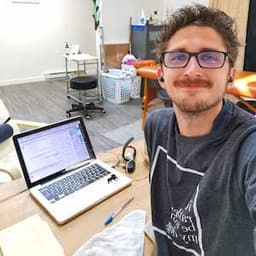
The Kala Red Light Therapy Pro Panel has been part of my daily recovery routine for over 12 months — and before that, it spent several weeks on my treatment table being compared head-to-head against my Rouge G4 Pro. As a certified athletic therapist treating active patients in Colwood, BC, I needed a panel that could handle both clinical use and personal recovery after long treatment days. The Kala Pro Panel earned its place on both fronts.
This review covers everything I've learned from daily use: light output, build quality, the Pulse Recovery+ frequency modes, and how it compares to the Rouge G4 Pro I also own. If you want to see how the broader lineup fits together, see how Kala stacks up in our testing.
Quick Take
The Kala Pro Panel is the best half-body red light panel I've used for daily muscle recovery and pain management. The dual wavelength setup (660nm + 850nm), 5W clinical-grade LEDs, and Pulse Recovery+ mode with customizable frequencies give it a meaningful edge over most panels in this price range. It's built for people who want results, not a shelf decoration.
Best for: Daily recovery, chronic pain, athletic performance, and anyone who wants pulsed frequency options beyond simple on/off light output.
Key Specs at a Glance
| Specification | Kala Pro Panel |
|---|---|
| Wavelengths | 660nm (red) + 850nm (near-infrared) |
| LED Power | 5W clinical-grade LEDs |
| Coverage | Half-body |
| EMF | Zero from 6 inches |
| Treatment Distance | 6–12 inches |
| Session Length | 10 / 15 / 20 min presets |
| Interface | Digital dash smart screen |
| Pulse Modes | 292 Hz, 586 Hz + custom Hz |
| Mounting | Built-in stand + door hanging kit |
| LED Lifespan | 50,000+ hours |
| Certifications | FDA Class II, ETL/UL, Health Canada |
| Origin | Canadian-designed (Kala Therapy Inc.) |
Hands-on experience
Setup took under 10 minutes out of the box. The built-in stand deploys in seconds — you fold it out from the back of the panel and it's stable on any flat surface. The door hanging kit is a simple bracket system that secures over a standard door frame without tools. I use the door mount at home most mornings and the stand on my treatment table at the clinic.
The digital dash screen is genuinely useful. You can see your selected mode, session timer, and frequency setting at a glance. It doesn't require an app or Bluetooth pairing — everything runs from the panel itself. For clinical use, this matters. I don't want to troubleshoot a smartphone connection before treating a patient.
My standard morning routine: I hang the panel on my office door at home, sit 8-10 inches away, set 292 Hz Pulse Recovery+ mode, and run a 20-minute session while reviewing patient notes. That combination of pulsed near-infrared and red light at 292 Hz has measurably improved my sleep quality since I added it to my pre-work routine. I've also used the 15-minute preset post-clinic for lower back recovery after long treatment days standing at the table.
Light output and performance
The 660nm wavelength targets surface tissue — skin, superficial muscles, and connective tissue. The 850nm near-infrared penetrates deeper, reaching joints, tendons, and deeper muscle bellies. Both fall squarely within the photobiomodulation optical window where tissue absorption is highest. Red light therapy at these wavelengths works by stimulating cytochrome c oxidase in the mitochondria, which increases ATP production and reduces inflammation at the cellular level (de Freitas & Hamblin, IEEE J Sel Top Quantum Electron, 2016; PMCID: PMC5215870).
The 5W LEDs matter more than most buyers realize. Budget panels often use 3W bulbs and compensate with marketing language. Higher LED wattage means more photons delivered per unit time, which translates to shorter effective session lengths. Understanding irradiance helps here — if you want to get into the numbers behind dose and distance, our irradiance guide covers exactly that.
Kala's zero EMF claim at 6 inches has been verified through 50-hour testing per device. I've tested this myself with an EMF meter — the reading drops to zero right around the 6-inch mark. For context, my Rouge G4 Pro also performs well on EMF, but the Kala panel reaches zero slightly closer to the device, which is an advantage if your treatment space is tight.
Pulse Recovery+ mode — what it actually does
This is the feature that separates the Kala Pro Panel from most panels in its class. Instead of delivering continuous light, Pulse Recovery+ pulses the LEDs at specific frequencies. The two preset options are 292 Hz and 586 Hz. You can also dial in custom frequencies via the digital dash.
| Mode | Target Benefits |
|---|---|
| Standard RED/NIR (continuous) | Skin health, general recovery, most users starting out |
| 292 Hz | Anxiety reduction, sleep quality, depression, chronic pain, wound healing |
| 586 Hz | Depression, anxiety, chronic pain, insomnia, seasonal affective disorder |
| Custom Hz | User-configurable via digital dash |
In my athletic therapy practice, I use the 292 Hz mode most often — both for my personal recovery and when integrating panel sessions before manual therapy. For athletes dealing with chronic inflammation and disrupted sleep, that frequency combination seems to produce the most consistent results in the first 2-3 weeks. You can explore more about how Kala's specific frequencies are designed to work in our Kala frequency chart guide.
Build quality and design
The panel feels substantial — not the flimsy plastic shell you get with budget Amazon panels. The housing is solid, the LED array is flush and evenly spaced, and the stand mechanism has no wobble. After 12 months of daily use with frequent moving between my home office and clinic, it hasn't developed any rattles or loose connections.
The included goggles are a nice touch. The 660nm wavelength is safe at treatment distances, but prolonged direct eye exposure to high-output LEDs isn't something to take chances with. Using the goggles is quick and doesn't interrupt the session.
The fan is audible — not loud, but present. In a quiet room, you'll hear it. I treat this as a minor positive since it indicates active thermal management, which protects LED lifespan. The unit runs warm during longer sessions but never hot to the touch.
Ease of use
Controls are straightforward. Power on, select your mode from the digital dash, set your timer, position yourself at 6-12 inches, and start the session. The timer presets (10, 15, 20 minutes) cover every scenario from a quick shoulder treatment to a full back-and-hamstring recovery session. The panel shuts off automatically when the timer ends.
First-time setup to first session is under 15 minutes if you read nothing. The quick-start guide is clear, and the digital dash labels are intuitive. I've handed this panel to patients unfamiliar with red light therapy and watched them figure it out without help within two minutes.
"I've tested the Kala Pro Panel alongside my Rouge G4 Pro — both deliver strong irradiance at therapeutic wavelengths, but Kala's Pulse Recovery+ mode at 292 Hz adds a dimension Rouge doesn't offer. For my athletes dealing with chronic inflammation and poor sleep, the pulsed delivery produces faster results in the first 2-3 weeks of consistent use. After 12 years and over 10,000 treatment hours, I'm selective about what earns space in my clinic. The Kala Pro Panel earned it." — Daryl Stubbs, CAT(C), RMT, Holistic Nutritionist
Pros and cons
Pros
- ✓Pulse Recovery+ at 292 Hz and 586 Hz — no comparable feature on Rouge or Joovv at this price
- ✓5W clinical-grade LEDs — higher wattage than most panels in this range
- ✓Digital dash with built-in timer — no app, no Bluetooth, no troubleshooting
- ✓Zero EMF at 6 inches — tested and verified
- ✓Built-in stand plus door hanging kit — versatile mounting
- ✓FDA Class II, Health Canada, ETL/UL certified — Canadian-designed
- ✓50,000-hour LED lifespan — daily use for years before replacement
Cons
- ✗Half-body coverage only — full-body users need to reposition or upgrade to Elite
- ✗Fan noise is present during operation — not ideal for silent meditation sessions
- ✗No multi-wavelength option — two wavelengths vs. PlatinumLED's five-wavelength BioMAX series
- ✗Goggles included but eye protection adds a step some users find inconvenient
Kala Pro Panel vs Rouge G4 Pro — quick comparison
I own both panels and use both regularly. Here's how they stack up on the points that actually matter:
| Feature | Kala Pro Panel | Rouge G4 Pro |
|---|---|---|
| Wavelengths | 660nm + 850nm | 660nm + 850nm |
| LED Power | 5W | 5W |
| Pulsed frequency modes | Yes — 292 Hz, 586 Hz, custom | No |
| App connectivity | No (standalone digital dash) | Yes (app-connected) |
| Modular expansion | No | Yes |
| EMF at 6 inches | Zero | Very low |
| Canadian brand | Yes | Yes |
| Price range | Lower | Higher (~$799-$1,399 USD) |
The Rouge G4 Pro wins on modularity — you can chain panels together if you want to expand to full-body coverage over time. If that matters to you, it's worth the extra investment. But if you want pulsed frequency modes for targeted recovery and pain management, the Kala Pro Panel has a feature Rouge simply doesn't offer. For a full breakdown, read our Rouge vs Kala comparison.
Who should buy the Kala Pro Panel
- ✓Athletes and active people who need daily muscle recovery and want the Pulse Recovery+ frequency option. Research on pre- and post-exercise photobiomodulation shows reduced muscle damage markers and faster recovery times (Ferraresi et al., J Biophotonics, 2016; PMCID: PMC5167494).
- ✓People managing chronic pain or joint issues who want consistent daily treatment. The 292 Hz mode specifically targets chronic pain pathways. You can read more about red light therapy for back pain and arthritis in our condition guides.
- ✓Clinic owners and practitioners who want a reliable, low-maintenance panel that patients can use without supervision.
- ✓Canadians who prefer buying from a Health Canada-cleared, Canadian-designed brand with domestic support.
- ✓Anyone upgrading from a budget panel who wants clinical-grade LEDs without paying for a full clinical system.
Who should skip it
- ✗Full-body coverage in one session — the Pro Panel is half-body. Either reposition mid-session or step up to the Kala Elite.
- ✗Multi-wavelength users — if you want 630nm, 810nm, and 830nm alongside the standard 660nm/850nm, PlatinumLED's BioMAX series offers more options.
- ✗App-first users — if you want app control, session tracking, and Bluetooth connectivity, the Rouge G4 Pro fits that workflow better.
- ✗Budget shoppers — if you genuinely can't justify the investment, a Hooga panel will get you 660nm + 850nm at a lower price point. You won't get 5W LEDs or pulsed modes, but the basic photobiomodulation still works.
For a broader comparison of where the Pro Panel ranks among all panels I've tested, see our best red light therapy panels guide.
My verdict
After 12 months of daily use, the Kala Red Light Therapy Pro Panel is the panel I reach for first. Not because I don't have alternatives — I own multiple panels from different brands — but because the combination of 5W LEDs, legitimate pulsed frequency modes, and solid build quality makes it the most versatile option for what I do every day.
The Pulse Recovery+ mode is the differentiator. Most panels at this price give you a switch: on or off. Kala gives you three programmable frequency options and a custom mode. For practitioners integrating red light therapy into recovery protocols, that matters. For athletes who want something beyond basic light output, it matters too.
The only real limitation is coverage area. If you want full-body coverage in one session, move to the Kala Elite. But for targeted recovery — which covers the vast majority of use cases I see in clinic and at home — the Pro Panel is enough.
"The Kala Pro Panel is the panel I recommend to most of my patients starting a home red light therapy practice. The Pulse Recovery+ modes at 292 Hz and 586 Hz add clinical value that generic panels can't replicate — and after 12 months of daily personal use alongside panels from Rouge and other brands, I haven't found anything in this price range that does more. If you want full-body coverage, step up to the Elite. If you want the best half-body panel for daily recovery, this is it." — Daryl Stubbs, CAT(C), RMT, Holistic Nutritionist
FAQ
How do you use the Kala Pro Panel?
Position the Kala Pro Panel 6-12 inches from the treatment area. Use the digital dash to select a mode — continuous RED/NIR for general recovery, or a Pulse Recovery+ frequency (292 Hz for sleep and pain, 586 Hz for depression and chronic pain). Sessions run 10-20 minutes. Most users do one session per day on the areas they're targeting. For more guidance on session frequency, see our how often to use red light therapy guide.
What is Pulse Recovery+ mode?
Pulse Recovery+ is Kala's proprietary pulsed light delivery system built into the Pro Panel. Instead of continuous light output, it pulses the LEDs at specific frequencies: 292 Hz (supports anxiety reduction, sleep quality, and chronic pain) and 586 Hz (targets depression, insomnia, and seasonal affective disorder). You can also set custom Hz frequencies via the digital dash. This feature isn't available on most panels at this price point.
Kala Pro vs Kala Elite — which one should I get?
The Kala Elite covers more body surface area than the Pro Panel — it's closer to full-body coverage where the Pro is half-body. If you're treating a specific zone (back, shoulders, legs), the Pro Panel is more than enough and costs less. If you want head-to-toe coverage in one session, step up to the Elite. Both share the same 5W LEDs, 660nm + 850nm wavelengths, Pulse Recovery+ modes, and digital dash.
Is the Kala Pro Panel worth it?
Yes, for most home users and clinic setups the Kala Pro Panel is worth the investment. It delivers clinical-grade 5W LEDs at 660nm and 850nm, zero EMF from 6 inches, a digital dash with timer and pulsed frequency modes, and a built-in stand with door hanging kit. Compared to budget panels, the build quality and Pulse Recovery+ mode justify the price difference. Kala also backs it with a 30-day money-back guarantee — which removes the risk of trying it.
Save 15% on Kala Red Light Therapy