
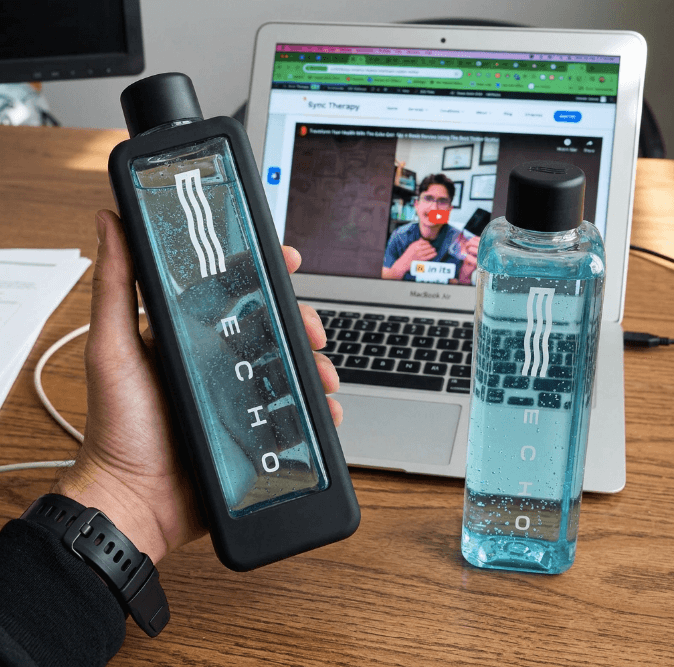
Keeping your Echo Flask clean is essential for consistent hydrogen output and long-term performance. The good news: it's simple. A daily rinse, weekly wash, and monthly deep clean are all you need. Here's exactly how to clean the Echo Flask properly—covering the bottle interior, exterior, generator, cap, and gasket.
Never use harsh chemicals or abrasive cleaners. Never submerge the Flask or place it in the dishwasher—this can damage the electronics and voids the warranty.
Echo Flask Cleaning Schedule
| Cleaning Method | Frequency |
|---|---|
| Water rinse | Daily (after each use) |
| Soap wash (interior) | Weekly |
| Gasket cleaning | Weekly |
| Vinegar descaling + Clean Flask cycle | Monthly |
Cleaning the Inside of the Flask
Weekly Cleaning Routine
- 1Wash the interior with mild soap and filtered water. Avoid harsh chemicals.
- 2Rinse thoroughly with warm filtered water to ensure all soap residue is removed from both the bottle and generator.
Tip: A flexible silicone bottle brush with a 1" diameter head and at least 12" in length works well for manual cleaning. Avoid abrasive brushes, as they can scratch the interior surface of the Flask.
Monthly Deep Cleaning & Descaling
Monthly descaling removes mineral buildup on the H2 generator and keeps hydrogen output at peak levels:
- 1Fill the Flask with a mixture of 1/3 white vinegar and 2/3 warm distilled water (any 5% distilled white vinegar is fine).
- 2Rinse, then fill with filtered water and run the "Clean Flask" cycle from the settings menu.
- 3Rinse thoroughly after the cycle is complete.
Cleaning the Outside of the Flask
- Hand wash only using a soft, damp cloth.
- Do not place the Flask in the dishwasher or submerge it in water.
- Keep it dry: Be especially careful to keep the screen, charging port, and generator's electrical components completely dry during cleaning.
- Port protection: While Echo Water does not currently offer them, an aftermarket USB-C port plug may help protect the charging port during cleaning.
- No abrasives: Avoid using rough cloths or sponges, as these may scratch the surface.
Cap Care
- Use a soft cloth or brush to clean the threads and crevices of your cap to keep it free of debris and buildup.
- Weekly cleaning of the gasket located within your cap will help prevent buildup or bacterial growth.
- Avoid submerging the cap: Water may seep in and damage the pressure release valve. If water does enter the valve, allow it to completely air dry before use.
Cleaning the Gasket
- 1Use tweezers or a dull object to carefully remove the gray gasket from the lid, avoiding punctures.
- 2Cleanse the gasket with mild detergent and filtered water, and rinse fully. You may also soak the gasket in the vinegar solution (mentioned above) for up to 2 hours to help prevent buildup or bacterial growth.
- 3Make sure the gasket and surrounding areas are clean of debris before reinserting.
- 4Reinsert the gasket into the lid, ensuring the "line" side faces inward as you reposition it.
What NOT to Do
- Never use harsh chemicals or abrasive cleaners
- Never submerge the Flask or place it in a dishwasher
- Never submerge the cap (damages pressure release valve)
- Never get the charging port or screen wet
- Never use apple cider vinegar, bleach, or harsh solvents
- Never use rough cloths, abrasive sponges, or hard brushes
- Never store the bottle completely dry (keep 1 tbsp of water on the electrode plate)
More Echo Flask Guides
- → Echo Flask Review — Full specs, pros, cons, and verdict
- → Echo Flask 8 PPM — What the hydrogen concentration means
- → Echo Flask vs Echo Go+ — Complete comparison
Buy Echo Flask
Use code: SYNCTHERAPY for 15% off
Get Echo Flask (15% Off)Free shipping on orders over $99 | 5-year warranty included