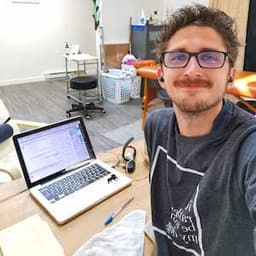
Is Kala red light therapy worth it — or is it just another wellness brand with slick marketing? That's the question I set out to answer after buying the Kala Pro Panel, the Kala Infrared PEMF Mat, and the Kala Red Light Face Mask. I'm a Certified Athletic Therapist with 12 years of clinical experience, and I also own Rouge G4 panels for direct comparison. Here's my honest take, including the legitimate criticisms.
Quick Verdict
Kala is a legitimate, FDA-cleared Canadian brand — not a scam. The panels and mask deliver measurable results for skin health, muscle recovery, and pain management. There are real downsides: some products are final sale, instruction manuals are thin, and newer products like the Wand have had pre-order delays. But against 40,000+ customers, a 4.9-star rating, and clinical-grade LED specs, those complaints don't outweigh the value. I use Kala products daily and recommend them in my athletic therapy practice.
What Makes Kala Legit
Skepticism about wellness devices is healthy. There are a lot of cheap panels with inflated claims. Kala is not that. Here's why the credentials check out.
FDA clearance, not just registration. Kala panels are FDA Class II Medical Devices (Registration: 3016171836). The PEMF Mat is FDA registered (3021032579). Both carry ETL/UL certification and are Health Canada cleared. These aren't self-declared — they're verified third-party certifications.
Clinical-grade LED specs. Kala uses 5W LEDs at 660nm (red) and 850nm (near-infrared) — the two wavelengths with the strongest evidence base for photobiomodulation. These fall squarely in the therapeutic "optical window" where tissue penetration is highest. Research shows red light at these wavelengths increases ATP production and reduces inflammation markers (de Freitas & Hamblin, IEEE J Sel Top Quantum Electron, 2016; PMCID: PMC5215870).
Zero EMF from 6 inches, tested per device. Every Kala panel goes through 50 hours of individual testing before shipping. EMF is a real concern with cheaper panels — Kala's zero-EMF claim at 6 inches is meaningful, especially for daily use. For more on this, see our red light therapy EMF guide.
Pulse Recovery+ modes at therapeutic frequencies. The Pro Panel and Elite Panel include pulsed delivery at 292 Hz and 586 Hz. These are clinically-used frequencies for pain, sleep, and mood support. My Rouge G4 panels don't have this. At the same price tier, Kala offers a feature set you genuinely can't find elsewhere.
Dragons' Den and Team Canada. Kala appeared on CBC's Dragons' Den and is the official recovery partner of Team Canada — with Sarah Nurse and Maarten Paes as endorsers. These aren't paid celebrity deals. They reflect actual institutional trust. See our article on Kala's Dragons' Den appearance for more context.
The Honest Negatives
No brand is perfect. Here's what real Kala customers have complained about — and my take on how serious each issue actually is.
| Complaint | How Common | My Assessment |
|---|---|---|
| Thin instruction manuals | Fairly common | Legitimate — especially for the PEMF mat's 9 programs. Kala's support and website fill the gap, but the in-box guide should be better. |
| Pre-order shipping delays (Wand) | Specific to newer products | Real issue for early adopters of the Wand. Panels and mask ship on time consistently. |
| Some products are final sale | Policy-level concern | The mask, sauna blanket, Quad, Duo, and stands are final sale — no returns. Panels and most devices have a 30-day money-back guarantee. |
| Price point higher than budget brands | Expected for clinical grade | Hooga and Infraredi are cheaper. Kala's specs, certifications, and Canadian support justify the price difference. |
| No app connectivity | Minor for most users | Rouge G4 has an app. Kala uses a digital dash screen instead — functional, just different. |
The instruction manual issue is the one I take most seriously. When I first set up the PEMF Mat, navigating the 9 programs from the paper guide alone was frustrating. I ended up using Kala's website and a quick call to their support line. That shouldn't be necessary. But it didn't stop the mat from working — and Kala's customer service was responsive.
Does Kala Red Light Therapy Actually Work?
Red light therapy's effectiveness isn't a Kala-specific question — it's a photobiomodulation question. The science is well-established. Pre-exercise red light reduces delayed onset muscle soreness and improves performance markers (Ferraresi, Huang & Hamblin, J Biophotonics, 2016; PMCID: PMC5167494). A 2014 trial of 113 people found 30 sessions improved skin texture and increased collagen density (Wunsch & Matuschka, Photomed Laser Surg, 2014; PMID: 24286286).
The question for any specific device is whether it delivers the right wavelengths at therapeutic irradiance levels. Kala's panels use 660nm and 850nm — both within the optimal photobiomodulation range. Their 5W LEDs produce clinical-level output. For our full breakdown of how these wavelengths compare, see our red light therapy guide.
"I use the Kala Pro Panel daily after treating patients at my clinic. The Pulse Recovery+ mode at 292 Hz is something I can't get on my Rouge G4 panels, and it's become part of my end-of-day recovery routine. After 12 years and 10,000+ treatment hours, I'm selective about what I recommend — Kala's panels earned their place."
Who Kala Is Worth It For
✓ Buy Kala if you want a Canadian-made, FDA-cleared device with clinical-grade LEDs and features like Pulse Recovery+ that mid-range competitors don't offer. The Pro Panel is the right starting point for most people — muscle recovery, joint pain, and skin health in one device.
✓ Buy Kala if you want a face mask that covers acne and anti-aging in one device. The Kala mask uses three wavelengths — 630nm red, 830nm NIR, and 465nm blue — where Omnilux and CurrentBody only use two. See our Kala mask review for the full comparison.
✓ Buy Kala if you're in Canada and want a brand with local support, Health Canada clearance, and the credibility of Dragons' Den and Team Canada backing.
✗ Skip Kala if you're buying the mask or sauna blanket and might want to return it — those are final sale. Make sure you've read the specs thoroughly before purchasing.
✗ Skip Kala if budget is the primary factor. Hooga panels start under $100 and deliver basic red and NIR light. You lose the Pulse modes, the digital dash, and the build quality — but if you need the lowest entry point, budget brands exist.
My Verdict
Kala red light therapy is worth it for most people shopping in the mid-to-premium home device range. The specs are real, the certifications are verified, and the performance matches what I expect from clinical-grade LEDs. The negatives — thin manuals, final sale on some products, no app — are real but not dealbreakers.
If you only want skin benefits, the Kala Mask handles that with three wavelengths in one session. If you want full-body muscle recovery, pain relief, and skin health, the Pro Panel is where most people should start. For our full Kala verdict covering every product in the lineup, that review has the complete breakdown.
"Three Kala products in my clinic and home setup. After months of daily use alongside my Rouge G4 panels, Kala holds up on every spec that matters — wavelength, irradiance, build, and EMF. The Pulse Recovery+ modes are the feature that puts it ahead for my athletes. That's not marketing — that's what I see in practice."
Frequently asked questions
Is Kala red light therapy a scam?
No. Kala Therapy is a legitimate Canadian company with FDA-cleared devices, 40,000+ customers, and a 4.9-star rating on their official site. They appeared on CBC's Dragons' Den and are the official recovery partner of Team Canada. Real complaints exist — mainly around instruction manuals and shipping delays on newer products — but there's no evidence of fraud or misrepresentation.
What are the negative reviews of Kala?
The most common complaints about Kala are: thin instruction manuals (especially for the PEMF mat's 9 programs), pre-order shipping delays on newer products like the Wand, and some products (mask, sauna blanket, Quad, Duo) being final sale with no returns. Build quality and LED performance are rarely criticized.
Is Kala red light therapy FDA approved?
Kala red light therapy panels are FDA Class II Medical Devices (Registration: 3016171836). The Kala Infrared PEMF Mat is also FDA registered (Registration: 3021032579). The devices are also ETL/UL certified and Health Canada cleared. FDA "approved" and FDA "cleared" are different — Kala devices are FDA cleared, which is the correct standard for these device types.
Is Kala red light therapy worth the money?
For most people, yes. Kala panels use 5W clinical-grade LEDs, deliver zero EMF from 6 inches, and include Pulse Recovery+ modes at therapeutic frequencies (292 Hz and 586 Hz) that competitors at the same price point don't offer. The 30-day money-back guarantee on panels reduces financial risk. At 15% off through the affiliate link, the price-to-performance ratio is strong compared to Joovv or Rouge at similar specs.
Save 15% on Kala Red Light Therapy