
As a Registered Massage Therapist and Certified Athletic Therapist with over a decade of clinical experience, I'm always evaluating new recovery tools that could benefit my clients. The Recharge Health FlexBeam caught my attention because of its clinical-grade specifications and the growing body of research supporting red light therapy for pain management. In this comprehensive FlexBeam review, I'll break down why I recommend this FlexBeam red light therapy device to clients dealing with chronic pain, what the science says, and whether the FlexBeam price justifies the investment.
FlexBeam Review: Quick Summary
FlexBeam Specifications:
- Wavelengths: 610-650nm (red) + 800-850nm (NIR)
- Power Output: 110 mW/cm² (10x typical devices)
- LEDs: 9 total (6 NIR + 3 red)
- Treatment Time: 10 minutes per session
- Warranty: 5 years
My Professional Rating:
- Clinical-grade power output
- Portable & wearable design
- Science-backed wavelengths
- Premium price point
Bottom Line: The FlexBeam is one of the most powerful portable red light therapy devices I've come across. Is FlexBeam worth it? For clients committed to consistent home therapy for back pain, knee pain, or neck pain, I believe it is.
Is FlexBeam Worth It? My Professional Opinion
After thoroughly researching the Recharge Health FlexBeam and comparing it to other devices on the market, my conclusion is: Yes, FlexBeam is worth it for clients serious about incorporating red light therapy into their recovery routine.
What impresses me most is the clinical-grade power output (110 mW/cm²) combined with the specific wavelengths that research has shown to be most effective for pain relief and tissue healing. I recommend this device to clients who want a professional-quality tool they can use at home between therapy sessions.
Get the Best Deal on FlexBeam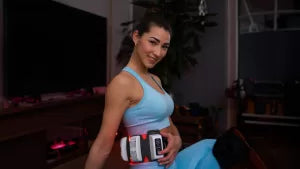
Why Trust This FlexBeam Review
I approach every product review from the perspective of what will genuinely help my clients. Here's my background:
Table of Contents
What Is FlexBeam?
The FlexBeam is a wearable, portable red light therapy device manufactured by Recharge Health, a company founded in 2018 and headquartered in Norway. Unlike large red light therapy panels that require you to stand in front of them, the FlexBeam red light therapy device wraps around your body using velcro straps, allowing targeted treatment of specific problem areas.
What sets the FlexBeam apart from many consumer devices I've evaluated is its clinical-grade power output. Many cheap red light devices on the market simply don't deliver enough energy to penetrate tissue effectively. The FlexBeam delivers 110 mW/cm², which is within the therapeutic range supported by research.
Key FlexBeam Facts:
- • Developed by Dr. Zulia Frost using NASA-derived technology
- • Used by 35,000+ customers in 100+ countries
- • Trusted by elite athletes including tennis champion Casper Ruud
- • 4.7/5 rating on Trustpilot with 450+ reviews
The FlexBeam's flexible design allows it to wrap around various body parts
The Science Behind Red Light Therapy
As a healthcare professional, I don't recommend any therapy without understanding the research behind it. Photobiomodulation (PBM)—the scientific term for red light therapy—has been studied extensively over the past 50 years, and the evidence is compelling.
How Photobiomodulation Works
According to a comprehensive review published in the journal AIMS Biophysics, photobiomodulation works by stimulating cytochrome c oxidase in the mitochondria, which increases ATP (cellular energy) production. This triggers a cascade of beneficial effects including reduced inflammation, improved circulation, and accelerated tissue repair (Hamblin, 2017).
What the Research Shows:
- A 2023 review in the European Journal of Physical and Rehabilitation Medicine found PBM effective for musculoskeletal pain control (PMC9980499)
- Meta-analysis showed PBM can reduce pain intensity in knee osteoarthritis patients (PMC10531845)
- Clinical trials demonstrate significant improvements in fibromyalgia pain severity (PMC12326686)
Optimal Wavelengths:
Research has identified specific wavelengths as most effective for therapeutic applications:
Red Light (600-670nm)
Penetrates 2-3cm. Best for superficial tissue, skin health, and surface inflammation.
Near-Infrared (800-850nm)
Penetrates up to 10cm. Best for deep tissue, joints, muscles, and bone.
From the Research:
"Photobiomodulation therapy applied in the form of low-intensity LASER and LED has been shown to reduce inflammation and swelling, promote healing, and reduce pain for an array of musculoskeletal conditions."
— European Journal of Physical and Rehabilitation Medicine, 2023
For more on the science, see my guide on photobiomodulation explained.
FlexBeam Specifications & Features
Here's what makes the FlexBeam stand out from a technical perspective:
Technical Specifications:
- Wavelengths: 610-650nm (red), 800-850nm (NIR)
- Peak Wavelengths: 622nm (red), 814nm (NIR)
- LED Configuration: 3 pods × 3 LEDs = 9 total
- LED Types: 6 NIR + 3 Red (OSRAM LEDs)
- Max Power Density: 110 mW/cm²
- Total Optical Power: 5.5W
- Frequency: Pulsed 0-100% duty cycle
- Penetration: Red 2.5cm, NIR up to 10cm
Device Features:
- Programs: 3 preset programs (10 min each)
- Battery: Lithium-ion, 5-8 sessions per charge
- Weight: 0.775kg (1.7 lbs)
- Controls: 3 buttons (on/off, program, play/pause)
- Cooling: Active cooling fans
- Safety: Over-temp/over-current auto shutdown
- EMF: Zero EMF emissions
- Warranty: 5 years
What's Included in the Box:
FlexBeam Device
Hardshell Travel Case
Power Supply + Adapters
52-Page Guidebook
Plus: Mini band, body band, duo band, and safety goggles
Why I Recommend FlexBeam to My Clients
In my clinic, I see clients struggling with chronic pain every day. While manual therapy is incredibly effective, the benefits can fade between sessions. That's why I'm always looking for evidence-based tools that clients can use at home to maintain and extend their progress.
Who I Recommend FlexBeam For:
- Chronic pain sufferers: Clients with persistent back, knee, or neck pain who need daily therapy between clinic visits
- Athletes and active individuals: Anyone looking to speed recovery after training and reduce muscle soreness
- Post-surgical patients: Those recovering from joint surgery who want to support the healing process
- Desk workers: Clients with repetitive strain and tension from prolonged sitting
The FlexBeam can be used on multiple body areas including back, shoulders, and joints
My Clinical Perspective:
What I appreciate about the FlexBeam is that it bridges the gap between professional treatment and home care. The power output is strong enough to be therapeutic (not just a gimmick), and the targeted design means clients can address specific problem areas. I see it as a complement to—not a replacement for—professional therapy.
FlexBeam for Back Pain
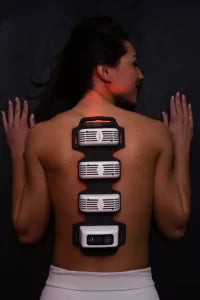
Lower back pain is the most common complaint I see in my practice. Research supports the use of photobiomodulation for chronic low back pain—one study found that laser photobiomodulation was more effective than ultrasound therapy for patients with chronic nonspecific low back pain (Lasers Med Sci, 2019).
Why I Recommend FlexBeam for Back Pain:
- Deep penetration: The 800-850nm NIR wavelengths reach deep lumbar muscles and tissues (up to 10cm)
- Flexible design: Wraps across the lower back to cover the entire lumbar region
- Consistent dosing: 10-minute preset programs deliver a reliable therapeutic dose
- Hands-free: Clients can use it while relaxing, reading, or watching TV
Recommended Protocol:
Position FlexBeam horizontally across the lower back using the body strap. Use Program 2 (medium intensity) once daily for 10 minutes. Best results typically seen with consistent use over 2-4 weeks.
For more information, see my comprehensive guide on red light therapy for back pain.
FlexBeam for Knee Pain
Knee osteoarthritis affects millions of people, and the research on photobiomodulation for this condition is particularly strong. A systematic review found that PBM can reduce pain intensity and may improve disability in knee osteoarthritis patients (PMC10531845). Another landmark meta-analysis of 88 trials concluded that low-level laser therapy was effective for knee osteoarthritis (Brosseau et al., 2000).
Why FlexBeam Excels for Knee Treatment:
- Wrap-around design: The flexible 3-pod configuration conforms perfectly to the knee joint
- Joint penetration: NIR light reaches the joint capsule, synovium, and cartilage
- Anti-inflammatory effect: Research shows PBM reduces inflammatory markers like PGE2
- Secure fit: Velcro straps keep the device in place during treatment
I often recommend FlexBeam to clients with knee osteoarthritis, meniscus issues, or post-surgical knee pain as a complement to their rehabilitation program.
FlexBeam positioned on the knee joint for targeted treatment
From the Research:
"Low level light therapy for osteoarthritis and rheumatoid arthritis showed pain attenuation of up to 90% in some studies, along with increased cellular rejuvenation and blood flow."
— Meta-analysis, PubMed
Learn more about red light therapy for arthritis.
FlexBeam for Neck Pain
Cervical pain and stiffness are increasingly common in our screen-dominated world. Research has demonstrated the efficacy of low-level laser therapy for cervical osteoarthritis (Ozdemir et al., 2001), and the principles apply to the broader category of neck pain.
FlexBeam can be positioned across the posterior neck and upper trapezius
Using FlexBeam for Neck Pain:
The FlexBeam's flexible design allows it to drape across the posterior neck and upper shoulders—a common area of tension for desk workers and those with forward head posture.
- Placement: Position across posterior neck and upper trapezius
- Program: Start with Program 1 (gentlest) for the neck area
- Frequency: Daily use, particularly after long periods of computer work
Important:
Do not use FlexBeam directly on the front of the throat or over the thyroid gland. Always position it on the back of the neck only.
For more on inflammation management, see red light therapy for inflammation.
FlexBeam vs Kineon: Which Should You Choose?
A question I get frequently is "FlexBeam vs Kineon"—which portable red light therapy device is better? Both are quality devices, but they serve different purposes. Here's my professional comparison:
| Feature | FlexBeam | Kineon Move+ Pro |
|---|---|---|
| Light Technology | LEDs only (Red + NIR) | LEDs + Laser diodes |
| Wavelengths | 622nm + 814nm | 660nm + 808nm |
| Total Power Output | 5.5W (16x more powerful) | ~0.34W |
| Treatment Area | Larger coverage | Smaller, focused |
| Best For | General wellness, larger areas, versatility | Specific joint pain |
| Price | $549 | $499 |
| Warranty | 5 years | 2 years |
I Recommend FlexBeam When:
- • Client needs versatility (back, gut, sleep, multiple areas)
- • Larger treatment areas are needed
- • Client values longer warranty protection
- • Client wants higher overall power output
I Recommend Kineon When:
- • Client has very specific joint pain (knee, elbow)
- • Client prefers laser technology for precision
- • Client primarily needs it for one body area
- • Budget is slightly tighter
FlexBeam Price: Is It Worth the Investment?
Let's be honest—the FlexBeam price isn't cheap. At $549 USD retail, it's a significant investment. But as someone who sees clients spend hundreds on therapies that don't work, I think it's important to put this in perspective.
FlexBeam Pricing:
- Retail Price: $549 USD
- Sale Price: Often $389-$489 (discounts available)
- Shipping: Free worldwide shipping
- HSA/FSA: Eligible for reimbursement
Cost Comparison:
- Professional RLT session: $50-100/session
- FlexBeam cost per use (1 year daily): ~$1.50
- FlexBeam cost per use (5 years daily): ~$0.30
- Pays for itself in 6-10 professional sessions
FlexBeam Pros and Cons
Pros
- Clinical-Grade Power: 110 mW/cm² is within the therapeutic range
- Science-Backed Wavelengths: 622nm and 814nm are well-studied
- Portable & Wearable: Use at home, work, or traveling
- Versatile Design: Treats back, knee, neck, and more
- 5-Year Warranty: Industry-leading coverage
- 60-Day Guarantee: Risk-free trial period
Cons
- Premium Price: $549 is significant for many
- Limited LEDs: Only 9 LEDs may create coverage gaps
- Battery Life: 5-8 sessions may require frequent charging
- Requires Consistency: Daily use needed for results
- No Face Use: Not designed for facial treatment
- Not FDA Approved: Wellness device classification
What Real Users Say: FlexBeam Reviews
Here's what actual users report in their Recharge Health FlexBeam reviews on Trustpilot:
"Love the product, very easy to use and convenient. I already noticed pain relief within a week use on a very chronic long time lower back pain. Also increased energy and mood change."
— Verified Buyer, Lower Back Pain
"I am a physical therapist with more than 25 years experience... I began using FlexBeam on me for various symptoms related to arthritis and inflammation. I've only been using it for a month and have seen significant improvement."
— Physical Therapist, Professional User
"This healing device brought me back from a serious neck injury three years ago with unbelievable pain... Using the FlexBeam religiously helped me regain full health and mobility."
— Verified Buyer, Neck Injury Recovery
"The charge only lasts for five or six uses; I was told it would last for eight. But at least it works and the results are good."
— Verified Buyer, Battery Feedback
The FlexBeam device and accessories
Common Review Themes:
Positive: Effective for chronic pain, easy to use, portable, excellent customer service
Negative: Premium price, battery life shorter than advertised, requires consistent daily use
FlexBeam FAQ
Is FlexBeam worth it?
In my professional opinion, FlexBeam is worth it for individuals committed to consistent use for pain relief and recovery. The clinical-grade power output, science-backed wavelengths, 5-year warranty, and 60-day money-back guarantee make it a solid investment. However, it requires daily use—if you're not willing to commit to that, you may not see the results you're hoping for.
What is the FlexBeam price?
The FlexBeam price is $549 USD at full retail. Recharge Health frequently offers discounts of $60-$160 off during promotions. When you factor in the 5-year warranty and compare it to professional red light therapy sessions ($50-100 each), it pays for itself relatively quickly for regular users.
Does FlexBeam work for back pain?
Based on clinical research supporting photobiomodulation for low back pain, FlexBeam can be effective for back pain. A study in Lasers in Medical Science found laser photobiomodulation more effective than ultrasound for chronic low back pain (source). Additionally, FlexBeam has been shown to enhance recovery times and reduce inflammation, making it a versatile option for those suffering from various types of pain. For individuals dealing with knee discomfort, exploring the best red light therapy devices for knee pain can further support overall joint health and mobility. By incorporating multiple therapies, patients can achieve more comprehensive relief and improved quality of life.
Is FlexBeam good for knee pain?
FlexBeam is well-suited for knee pain due to its wrap-around design. Meta-analyses have shown photobiomodulation can reduce pain intensity in knee osteoarthritis patients (PMC10531845).
FlexBeam vs Kineon: Which is better?
FlexBeam vs Kineon comes down to your needs. FlexBeam offers more total power (5.5W vs ~0.34W), covers larger areas, and is more versatile. Kineon Move+ Pro uses laser diodes for deeper, focused penetration—better for specific joint issues. I recommend FlexBeam for versatility and Kineon for targeted joint pain.
Is FlexBeam FDA approved?
FlexBeam is not FDA approved as a medical device. It's classified as a wellness device. However, it complies with international safety standards (IEC 60601-1, ISO 10993) and is HSA/FSA eligible for reimbursement.
What is FlexBeam's return policy?
FlexBeam offers a 60-day money-back guarantee. If you're not satisfied, return it within 60 days for a full refund. The device also comes with a 5-year warranty covering defects.
Scientific References
- Hamblin MR. "Mechanisms and applications of the anti-inflammatory effects of photobiomodulation." AIMS Biophys. 2017. PubMed
- Stausholm MB, et al. "Low-intensity LASER and LED for pain control of musculoskeletal conditions." Eur J Phys Rehabil Med. 2023. PMC
- Yeh SW, et al. "Photobiomodulation Therapy for Arthritis." Int J Mol Sci. 2023. PMC
- Brosseau L, et al. "Low level laser therapy for osteoarthritis and rheumatoid arthritis." J Rheumatol. 2000. PubMed
- Alayat MS, et al. "Laser photobiomodulation vs ultrasound for chronic low back pain." Lasers Med Sci. 2019. PubMed
- Ozdemir F, et al. "Low-power laser therapy for cervical osteoarthritis." Clin Rheumatol. 2001. PubMed
FlexBeam Review: My Final Recommendation
As a healthcare professional who evaluates recovery tools daily, I'm confident recommending the Recharge Health FlexBeam to clients seeking an effective home-use red light therapy device. The clinical-grade specifications, science-backed wavelengths, and overwhelmingly positive user reviews make it a standout choice.
Is FlexBeam worth it? For clients committed to consistent daily use for back pain, knee pain, or neck pain—yes. The FlexBeam price is premium, but the 5-year warranty, 60-day guarantee, and long-term value make it a sound investment.
60-Day Money-Back Guarantee | 5-Year Warranty | Free Worldwide Shipping