
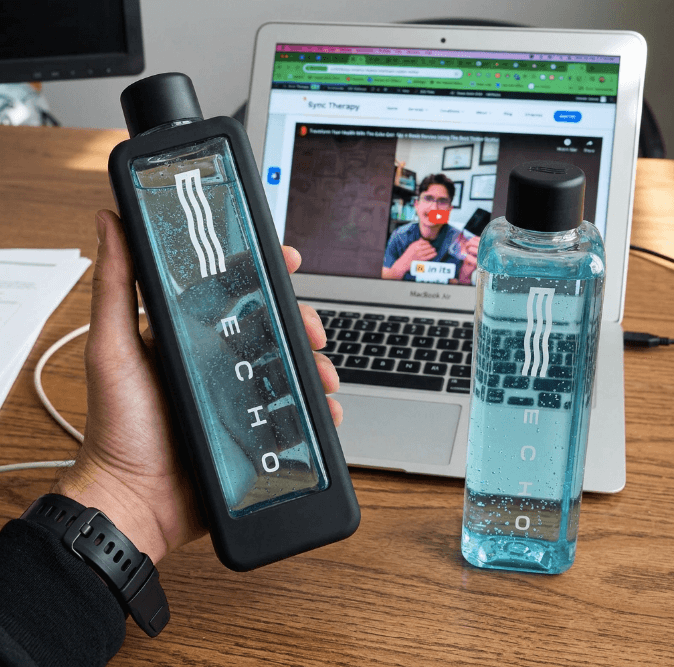
If you're considering hydrogen water, you've probably compared two options: a hydrogen water bottle like the Echo Flask, or hydrogen tablets you drop into regular water. Both deliver molecular hydrogen, but the differences in concentration, cost, and convenience are significant. Here's the full comparison.
Short answer: The Echo Flask costs more upfront but pays for itself in 3-6 months. It delivers higher hydrogen concentrations and has zero recurring costs.
Echo Flask vs Hydrogen Tablets: Side-by-Side
| Factor | Echo Flask | Hydrogen Tablets |
|---|---|---|
| Hydrogen Concentration | Up to 8 ppm | 1-3 ppm (typical) |
| Upfront Cost | $299 | $20-$60 per bottle |
| Cost Per Serving | ~$0.05 | $0.50-$1.50 |
| Annual Cost (3x/day) | ~$60/year | $550-$1,640/year |
| Recurring Costs | None | Ongoing tablet purchases |
| Convenience (Daily) | Fill and press button | Open, drop, wait, drink |
| Convenience (Travel) | Needs charging | No device needed |
| Hydrogen Retention | Sealed bottle | Open container (gas escapes) |
| Warranty | 5 years | N/A |
Hydrogen Concentration
This is the biggest difference. The Echo Flask uses SPE/PEM electrolysis with platinum-coated titanium electrodes to produce up to 6 ppm in 10 minutes and up to 8 ppm in 20 minutes. The hydrogen is generated inside a sealed bottle, which minimizes gas escape.
Hydrogen tablets typically produce 1-3 ppm depending on brand, water temperature, and container. Because you drop them into an open glass or bottle, dissolved hydrogen begins escaping immediately. By the time you finish drinking, concentration has dropped further.
Cost Per Serving
| Method | Cost Per Serving | Monthly (3x/day) | Annual (3x/day) |
|---|---|---|---|
| Echo Flask | ~$0.05 | ~$5 | ~$60 |
| Budget tablets | $0.50 | $45 | $550 |
| Premium tablets | $1.50 | $135 | $1,640 |
Echo Flask cost per serving is calculated over the 5-year warranty period at 3 servings per day. The only ongoing costs are water and negligible electricity.
Convenience
For daily home use, the Echo Flask wins. Fill it with filtered water, press a button, wait 10-20 minutes, drink. No ordering tablets, no running out, no dissolving time.
For travel, tablets have an edge. They're small, light, and don't need charging. If you travel frequently and don't want to carry a device, tablets work as a backup. But the Echo Flask's battery lasts multiple days on a charge, so it's still practical for trips.
Long-Term Value
The math is clear. At 3 servings per day:
- Echo Flask breaks even in 3-6 months compared to mid-range tablets
- Over 5 years: Echo Flask total cost = ~$299. Tablets total cost = $2,750-$8,200
- Higher hydrogen concentration per serving with the Flask
- No supply chain dependency — you never run out
The Verdict
If you plan to drink hydrogen water daily, the Echo Flask is the better investment. Higher concentration, lower long-term cost, and no recurring purchases. Tablets make sense as an occasional supplement or travel backup, but not as a primary daily source.
Read the full Echo Flask review for complete specs, or check the Echo Flask price breakdown for a detailed cost analysis.
More Echo Flask Guides
- → Echo Flask Review — Full specs, pros, cons, and verdict
- → Echo Flask Price — Complete cost breakdown
- → Echo Flask 8 PPM — What the hydrogen concentration means
Buy Echo Flask
Use code: SYNCTHERAPY for 15% off
Get Echo Flask (15% Off)Free shipping on orders over $99 | 5-year warranty included