
Welcome! I’m RMT Daryl from Sync Massage Therapy. If you’re one of the many Langford professionals who commutes to a desk job, you know the reality: hours spent sitting in a car, followed by more hours in an office chair. That persistent ache in your neck, shoulders, and back isn’t just a nuisance—it’s a predictable outcome of a sedentary lifestyle. This guide explains the science behind desk-bound pain and outlines how Registered Massage Therapy is a powerful, evidence-based solution to help you find lasting relief.
Your Path to a Pain-Free Workday
That persistent ache from your desk job isn’t something you have to live with. It’s a direct result of how prolonged sitting forces your body into an unnatural, strained posture. The good news is that this is a treatable—and preventable—condition. Registered Massage Therapy (RMT) offers a clinical, science-backed solution that directly counteracts this damage by targeting the root causes of your neck and back pain. By combining expert manual therapy with proactive ergonomic adjustments, you can move from a reactive cycle of pain to a sustainable strategy for prevention and well-being. This guide will show you how.
The Anatomy of a Desk-Bound Body: Why Sitting Causes Pain
The human body, an evolutionary marvel of mobility, is fundamentally ill-suited for the static demands of prolonged sitting. The chronic pain that plagues desk workers isn’t a sign of weakness but a physiological response to an environment that contradicts our biological design. This discomfort arises from a cascade of biomechanical distortions that begin the moment you settle into a chair for an extended period.
The “C-Shape” Collapse
In a standing position, your spine has a natural “S” curve to distribute weight efficiently. Prolonged sitting, especially in an unsupportive chair, encourages your pelvis to tilt backward. This flattens the healthy inward curve of your lower back, forcing your entire spine into an unnatural, slumped “C-shape.” This posture places continuous strain on your spinal ligaments, muscles, and intervertebral discs, which can lead to chronic low back pain and accelerate degenerative changes.
Forward Head Posture & “Tech Neck”
When your lower back slumps, your body must compensate to keep your eyes level with the computer screen. This results in forward head posture, where your head juts forward out of alignment with your shoulders. The biomechanical implications are severe: for every inch your head moves forward, its effective weight on your neck and shoulder muscles increases by about 10 pounds. This forces the muscles in your upper back and neck into a state of constant contraction, a primary driver of neck pain, shoulder tension, and cervicogenic headaches.
Muscle Imbalances: Upper & Lower Crossed Syndromes
Over time, this poor posture creates a predictable pattern of muscular imbalance. The muscles on the front of your body (like your chest and hip flexors) become chronically shortened and tight. At the same time, the muscles on the back of your body (like your glutes, core stabilizers, and deep neck flexors) become lengthened and weak. This imbalance reinforces the poor posture, creating a self-perpetuating cycle of pain and dysfunction that is difficult to break without targeted intervention.
The Science of Relief: How RMT Restores Musculoskeletal Health
Registered Massage Therapy is a clinical discipline that directly counteracts the damage caused by sitting. Its effectiveness is rooted in well-documented mechanical, circulatory, and neuro-hormonal mechanisms that address both the physical and psychological components of pain. In addition to alleviating discomfort associated with prolonged sitting, massage therapy also promotes relaxation and reduces stress levels, which can further enhance overall well-being. For those seeking relief in the area, exploring massage therapy benefits in Colwood can provide tailored treatments that address individual needs. By incorporating regular sessions into one’s routine, clients may experience improved posture, increased flexibility, and a greater sense of mental clarity.
Restoring Blood Flow
Where prolonged sitting causes circulatory stagnation, massage actively promotes fluid movement. Techniques like effleurage (long, gliding strokes) mechanically push blood through congested areas and stimulate the lymphatic system, which clears metabolic waste. This delivers fresh oxygen to tissues starved by static posture and flushes out byproducts like lactic acid that contribute to soreness.
Breaking Down Adhesions
Chronically contracted muscles develop fibrous adhesions—bands of painful, rigid scar tissue. The forces applied during deep tissue massage physically break down these adhesions, restoring flexibility, improving the alignment of tissue fibers, and alleviating the stiffness that characterizes a body confined to a chair.
Lowering Stress Hormones
Chronic work stress keeps the body in a “fight or flight” state, elevating the stress hormone cortisol. A wealth of research, including a key study in the Journal of Alternative and Complementary Medicine, shows massage significantly decreases cortisol, helping to break the vicious cycle where stress exacerbates pain, and pain causes more stress.
Boosting “Feel-Good” Chemicals
Massage is also proven to increase the production of key neurotransmitters associated with well-being. It boosts serotonin (which helps regulate mood and sleep) and dopamine (associated with focus and motivation), while also triggering the release of endorphins, the body’s natural painkillers. This neurochemical shift explains the profound sense of well-being and lasting pain relief many people experience.
A Targeted Toolkit: RMT Techniques for Neck & Back Pain
At Sync Therapy, we don’t use a one-size-fits-all routine. We apply a diverse toolkit of specialized techniques to address the specific source of your pain. Understanding these highlights the precision involved in clinical massage.
| Technique | How It Works | Ideal for Treating |
|---|---|---|
| Deep Tissue Massage | Uses slow, forceful strokes to target deep muscle layers and break down chronic adhesions (“knots”). | Chronic, deep-seated aches in the low back and shoulders; generalized muscle stiffness. |
| Myofascial Release | Applies gentle, sustained pressure to the body’s connective tissue web (fascia) to release restrictions and improve mobility. | Widespread stiffness, feelings of being “stuck,” and postural distortions. |
| Trigger Point Therapy | Applies direct, sustained pressure to hyperirritable muscle knots to deactivate them and relieve both local and referred pain. | Tension headaches, sciatica-like symptoms, and sharp, specific pain patterns. |
Building Resilience: Your Ergonomic Blueprint
While massage therapy is a powerful treatment, prevention is key. Creating an ergonomic workspace is your most important strategy for long-term relief. A proper setup supports your body’s natural posture, reducing strain on your muscles and spine. Incorporating regular breaks to stretch and move throughout the day can also enhance your well-being. Additionally, seeking professional help, such as athletic therapy services in Langford, can further aid in maintaining your physical health. By taking proactive steps, you can ensure a more sustainable and comfortable work experience. Learning techniques such as proper lifting and sitting posture can also contribute significantly to your overall comfort. If you’re looking for immediate relief from chronic tension or discomfort, consider exploring options like massage therapy Langford, which can complement your ergonomic efforts. Ultimately, a well-rounded approach that combines preventive measures, professional support, and self-care can lead to a healthier, happier you.
The 2-Minute Ergonomic Tune-Up
Use this simple checklist from the Canadian Centre for Occupational Health and Safety (CCOHS) to assess and adjust your workspace right now.
- Chair Height: Your feet are flat on the floor, and your thighs are parallel to the ground.
- Lumbar Support: Your chair’s backrest fits snugly into the curve of your lower back.
- Monitor Height: The top of your screen is at or slightly below eye level, and it’s an arm’s length away.
- Keyboard & Mouse: Your wrists are straight and neutral, with your elbows bent at a comfortable 90-degree angle.
The Most Important Ergonomic Tip: MOVE!
Even a perfect setup is not enough. The human body craves movement. Set a timer to stand up, stretch, and walk around for a minute every 30 minutes. This simple habit is crucial for preventing static muscle fatigue and promoting circulation.
Frequently Asked Questions
How often should I get a massage if I work at a desk all day?
For managing the chronic strain of a desk job, a proactive approach is best. Many of our clients find that a maintenance session every 2-4 weeks is highly effective for preventing pain from accumulating and for managing stress. We can work with you to create a personalized plan.
Will deep tissue massage hurt?
Deep tissue massage can be intense, but it should never be painful to the point of causing you to tense up. There’s a difference between a “good hurt” that feels productive and sharp pain. Communication is key, and I will always work within your comfort level to achieve the best results.
Do you offer direct billing for my work benefits?
Yes, we offer direct billing for most major extended health providers, including Pacific Blue Cross and Sun Life, to make your experience as seamless as possible.
Reclaim Your Comfort and Focus
Chronic neck and back pain doesn’t have to be a normal part of your work life. By combining the expert, targeted treatment of Registered Massage Therapy with proactive ergonomic strategies, you can break the cycle of pain and take control of your musculoskeletal health. Exploring back pain treatment options in Victoria can lead to significant improvements in your everyday comfort and productivity. Integrating these approaches not only alleviates discomfort but also empowers you to promote better posture and movement habits. Taking action towards your health can pave the way for a more active and enjoyable work life. By seeking out back pain treatment options in Victoria, individuals can access personalized care tailored to their specific needs. These solutions not only address the immediate symptoms but also focus on long-term well-being, ensuring that you can perform your tasks without the constant distraction of discomfort. Prioritizing your musculoskeletal health is an investment in both your professional and personal life, fostering resilience against future pain.
Book Your Desk Worker’s Relief Session Today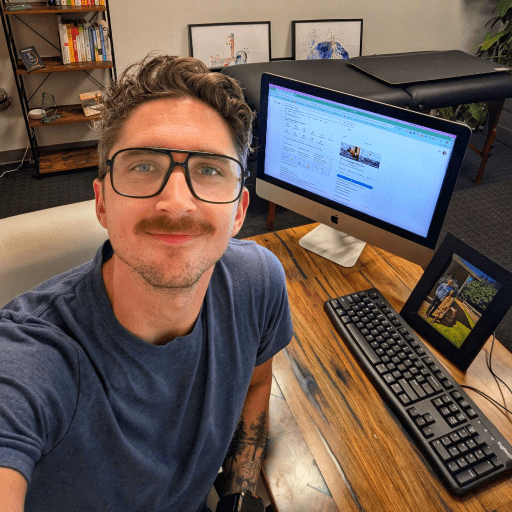
Daryl Stubbs
RMT • Certified Athletic Therapist • Holistic Nutritionist
Daryl Stubbs is the founder of Sync Therapy and an 8-time award-winning clinician. With over a decade of experience since graduating in 2013, Daryl specializes in combining hands-on massage therapy with advanced innovations like red-light therapy, hydrogen water and PEMF. He helps clients in Colwood, Langford, and Victoria, BC move better and reduce pain through targeted rehab and gut-health protocols.
Credentials & Recognition:
- Bachelor of Athletic & Exercise Therapy (Camosun College)
- Voted "Best Massage Clinic" & "Best Rehab Clinic" (Community Votes, 2022–Present)